Titanium Materials & Grades — Engineering Reference
CP, alpha, alpha-beta, and beta titanium alloys — composition, mechanical properties, ASTM/ASME/AMS/ISO standards, and grade-selection logic for aerospace, medical, chemical, and industrial applications.
22 articles in this cluster
Why this matters
Selecting the wrong titanium grade introduces structural, compliance, and supply-chain risks that no downstream process can fix. Grade 5 (Ti-6Al-4V) covers roughly half of global titanium usage, but applying it outside its precise metallurgical window causes premature fatigue fracture, stress-corrosion cracking, or excessive thermal creep. The decision matrix — strength vs ductility vs fracture toughness vs biocompatibility vs cost — must be made before the print is released, not after the tooling is ordered. The articles below walk through the grades, the standards that govern them, and the trade-offs that matter in service.
All 22 articles in this cluster
Aerospace Fastener Selection: Titanium vs Inconel vs Steel Comparative Analysis
An engineering selection guide for aerospace fasteners. Covers titanium (Ti-6Al-4V, Ti-6Al-4V ELI, Beta-C), Inconel 718, A286 steel, and PH 17-4 stainless. Includes strength-to-weight, temperature limits, galvanic compatibility, fatigue, and procurement rules for aerospace structural bolting.
CP Grade 1 vs Grade 2 Titanium: Ductility, Strength, and Formability Trade-Offs
A materials engineering comparison of commercially pure Grade 1 and Grade 2 titanium. Covers the oxygen-driven strength-formability trade-off, deep draw ratios, weldability, service stiffness requirements, and procurement rules for selecting between the two softest CP grades.
Grade 11 Titanium Properties: Chemical Composition and Corrosion Resistance Limits
An engineering analysis of ASTM Grade 11 titanium — the palladium-stabilized version of Grade 1. Covers the role of the 0.12 to 0.25 percent palladium addition, the reducing acid service boundary, welding filler matching, and the procurement trap of over-specification in oxidizing environments.
Master Titanium Grade Comparison Chart: Mechanical Properties Across Grades 1-29
An engineering reference for ASTM titanium grades 1 through 29. Covers unalloyed CP grades, palladium-stabilized variants, alpha and near-alpha alloys, alpha-beta alloys, and beta alloys. Includes yield strength, corrosion behavior, weldability, temperature limits, and procurement cost gradient.
TA6V ELI (Grade 23) Titanium Specifications: Biocompatibility and Fracture Toughness
A materials engineering analysis of Grade 23 (Ti-6Al-4V ELI) titanium. Covers the interstitial ceiling reductions vs Grade 5, ASTM F136 and ISO 5832-3 medical standards, fracture toughness at cryogenic temperatures, and procurement rules for implant and aerospace cryogenic applications.
Titanium Carbide TiC Plates vs Pure Titanium: Hardness and Wear Resistance
A materials engineering comparison of titanium carbide (TiC) ceramic plates, cermet TiC composites, and pure titanium metal. Covers hardness, wear resistance, fracture toughness, manufacturing methods, and the procurement framework for wear-critical applications in mining, aerospace, and chemical processing.
Titanium Stress Relieving and Heat Treatment: Temperature Control and Distortion Prevention
A heat treatment engineering guide for titanium components. Covers stress relief vs annealing vs solution treatment and aging, temperature-time profiles for Ti-6Al-4V and Ti-6Al-4V ELI, vacuum and argon atmosphere control, distortion prediction, and AS9100 process qualification.
Titanium vs Aluminum Aerospace Structural Components: Material Selection Trade-Off
An aerospace materials selection guide comparing titanium and aluminum for structural components. Covers strength-to-weight ratio, fatigue performance, corrosion behavior, temperature limits, manufacturing cost, and the procurement framework for choosing between the two alloy families.
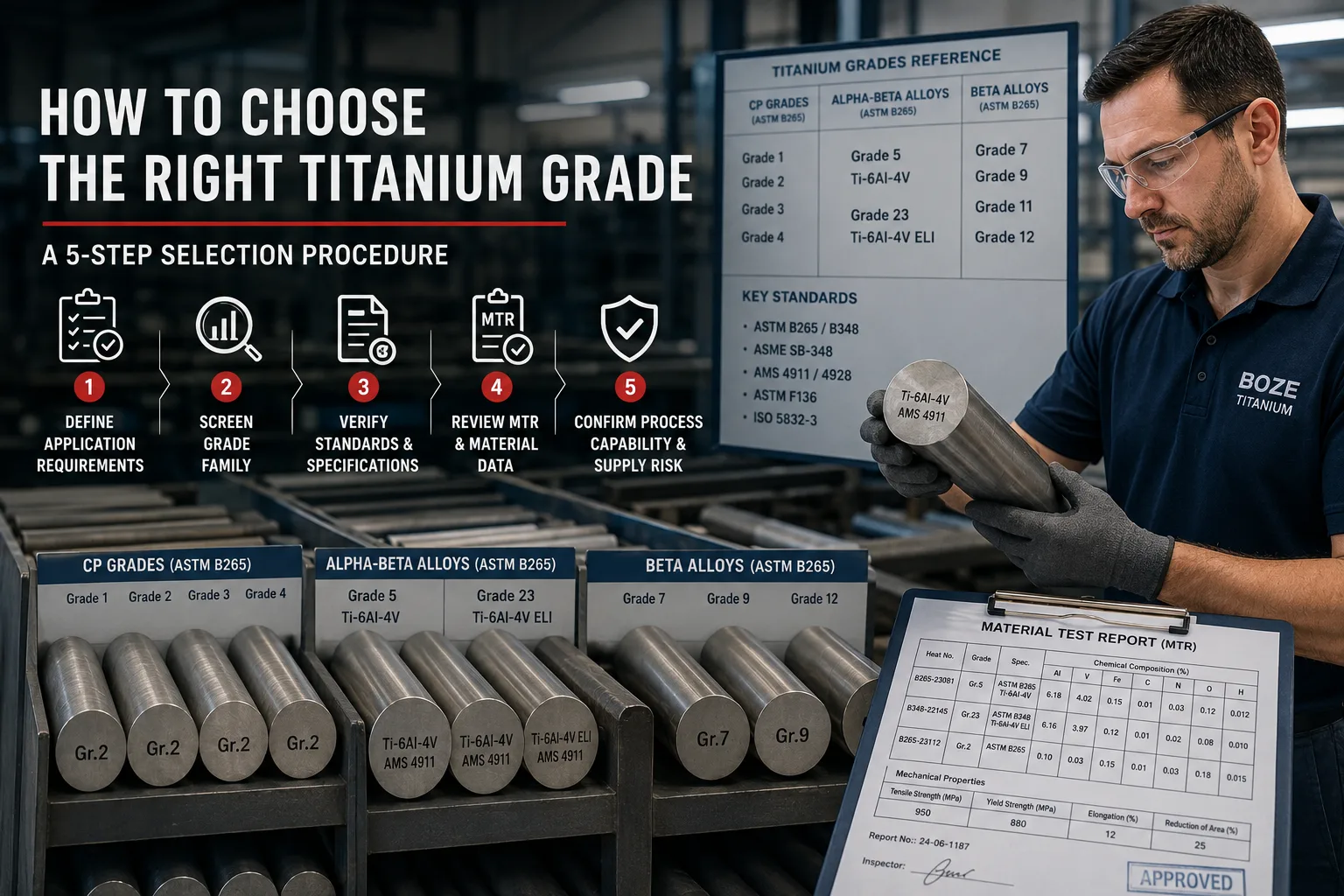
How to Choose the Right Titanium Grade — A 5-Step Selection Procedure
A procurement engineer's 5-step procedure for selecting the correct titanium grade (Grade 1-4, Grade 5 Ti-6Al-4V, Grade 23 Ti-6Al-4V ELI, beta alloys) for aerospace, medical, chemical and industrial components. Cross-references ASTM, ASME, AMS and ISO standards with first-hand MTR and shop-floor data.
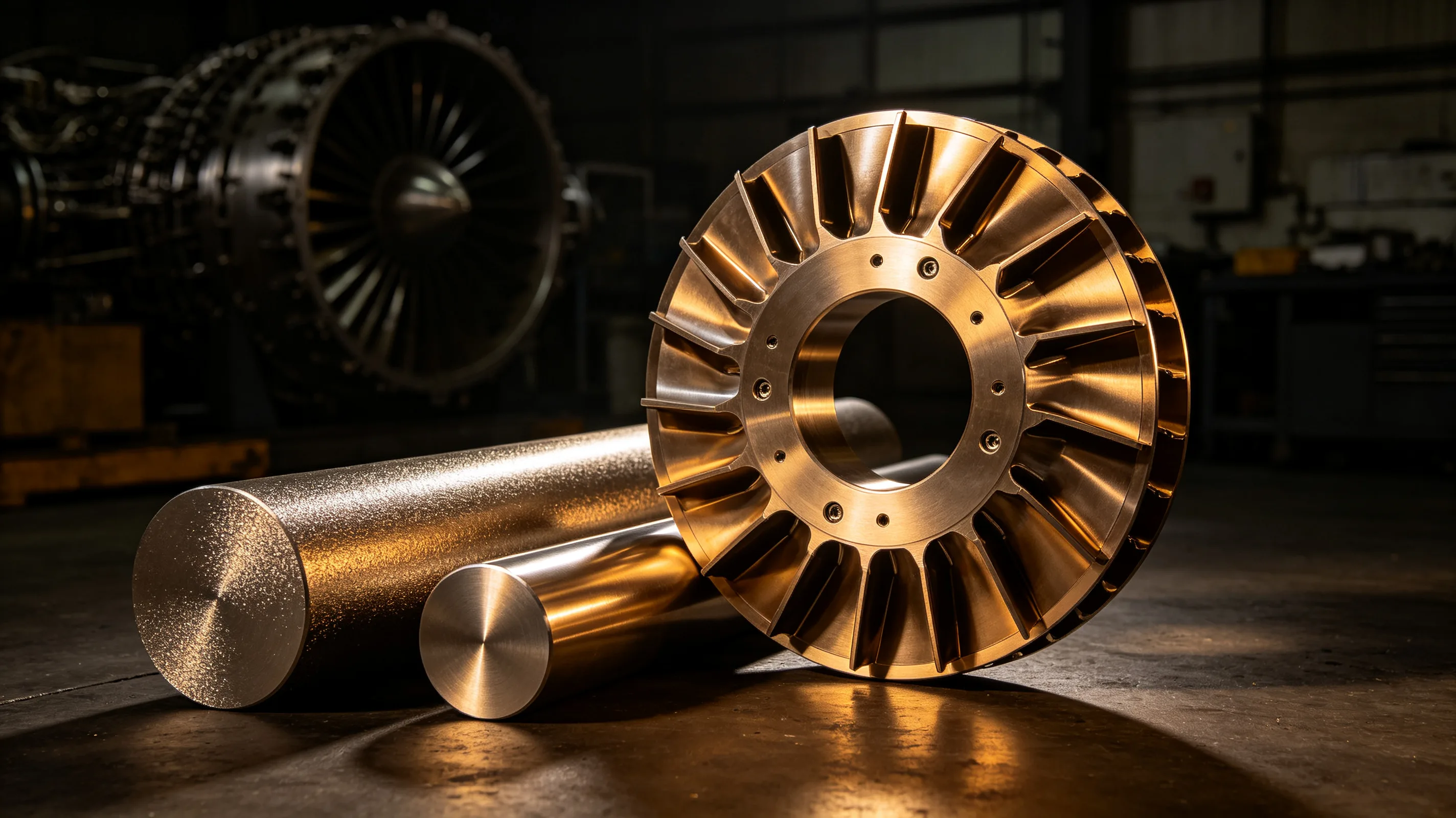
Ti-6242 Titanium Alloy: Properties, Specifications, and Applications for Aerospace
A technical guide to Ti-6242 (Ti-6Al-2Sn-4Zr-2Mo) near-alpha titanium alloy for elevated-temperature aerospace applications — mechanical properties up to 540°C, AMS and ASTM standards, machining constraints, procurement considerations, and supplier qualification criteria for gas turbine engine components.
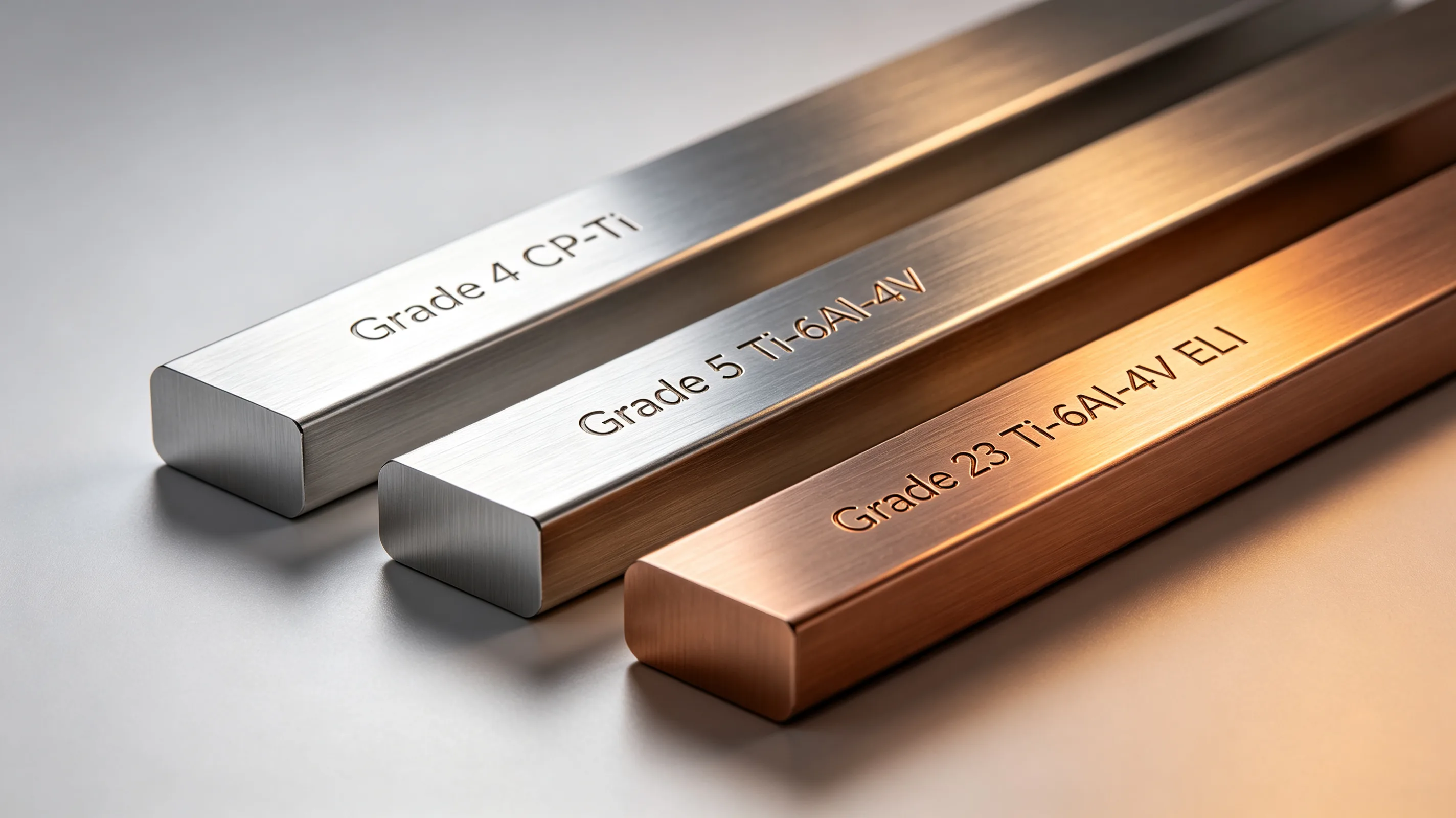
Titanium Grade 4 vs Grade 5 vs Grade 23: Three-Way Engineering Comparison for Medical and Industrial Applications
A three-way engineering comparison of Grade 4 CP-Titanium, Grade 5 (Ti-6Al-4V), and Grade 23 (Ti-6Al-4V ELI) — chemical composition differences, mechanical property trade-offs across the strength-ductility-toughness spectrum, applicable standards for each grade, cost comparisons, machining and processing implications, and application-specific selection criteria for medical implants, aerospace components, chemical processing equipment, and marine hardware.
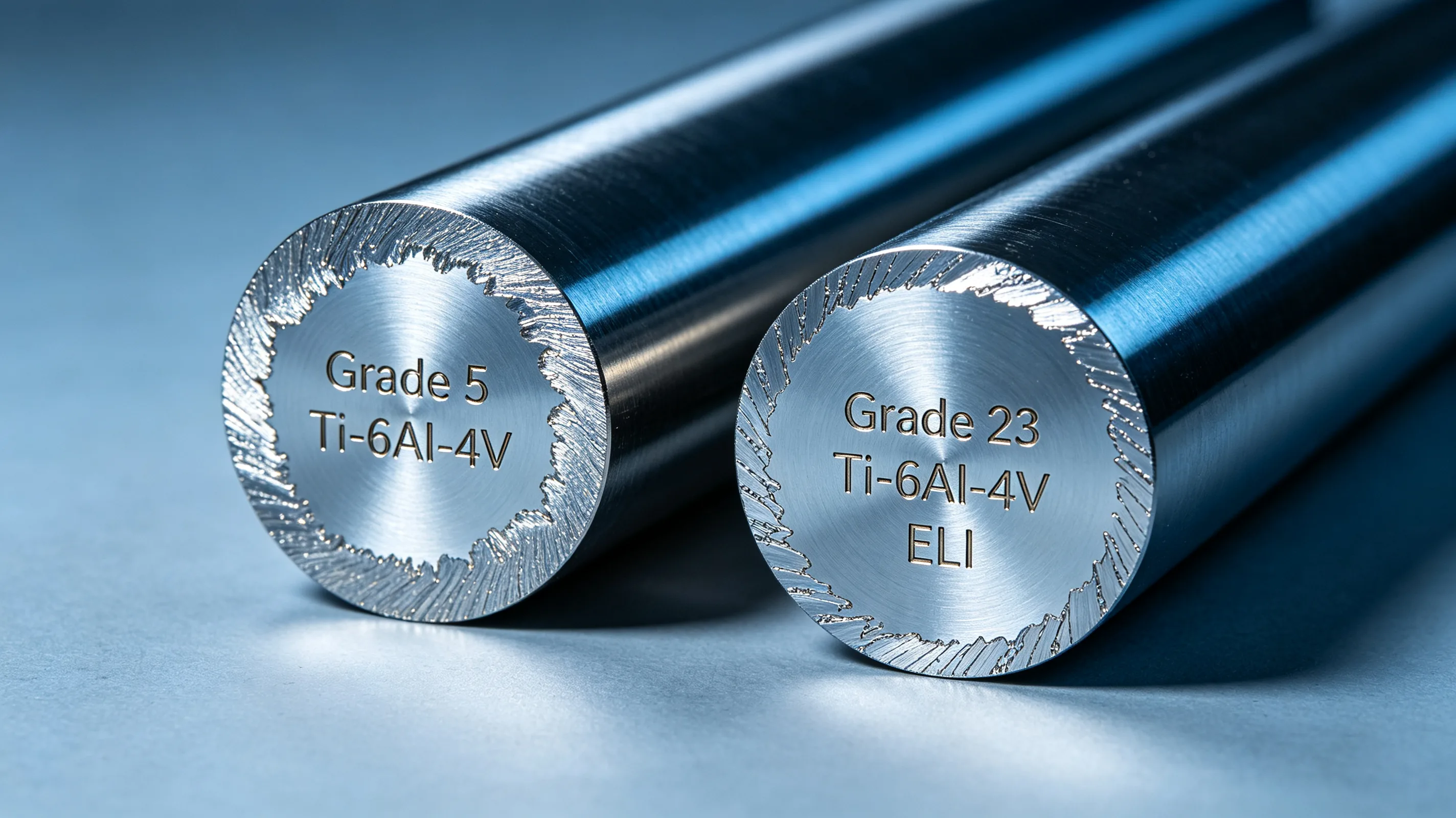
Titanium Grade 23 vs Grade 5: Key Differences, Pros and Cons for Engineers and Procurement
A detailed engineering comparison of Grade 23 (Ti-6Al-4V ELI) and Grade 5 (Ti-6Al-4V) titanium — interstitial chemistry differences, mechanical property trade-offs, fracture toughness and fatigue performance, machinability and cost implications, applicable standards, and selection criteria for medical, aerospace, and cryogenic applications where the choice between ELI and standard-grade Ti-6Al-4V is not obvious.
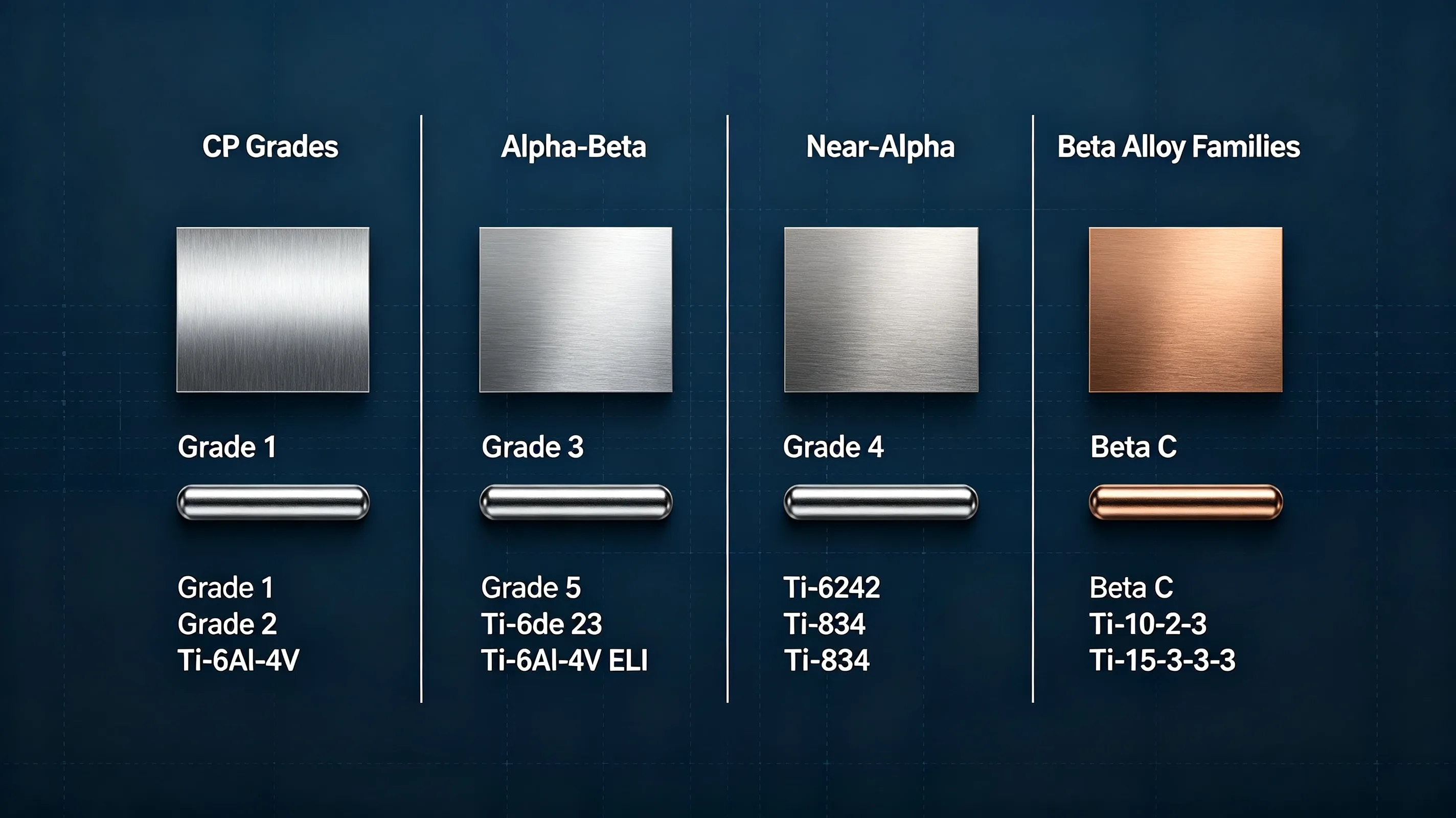
Titanium Grade Chart Explained: How Titanium Grades Are Classified
A systematic explanation of the titanium grade chart — how CP grades (1–4), alpha-beta alloys (Grade 5, Grade 23, Grade 9), near-alpha alloys (Ti-6242), and beta alloys (Ti-1023, Beta-C) are classified by composition, microstructure, mechanical properties, and operating temperature range. Selection logic and procurement implications of each category.
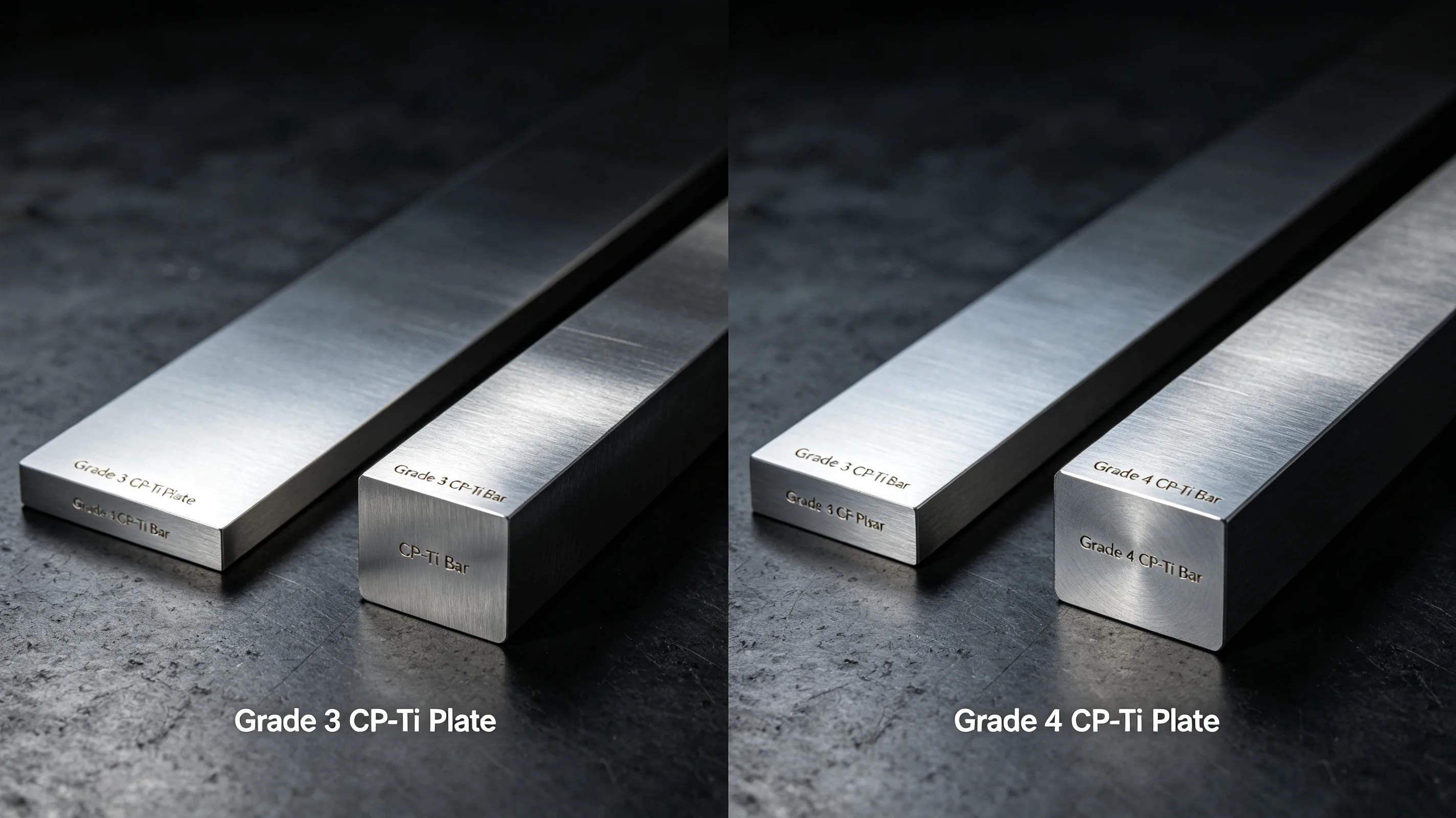
Titanium Grade 3 vs Grade 4: What's the Difference and Which One Should You Specify?
A direct engineering comparison of Grade 3 and Grade 4 commercially pure titanium — tensile strength, ductility, formability, machinability, corrosion resistance, applicable standards, material cost, and procurement lead time differences. Selection criteria for chemical processing, marine, and industrial applications where the choice between these two CP grades is not obvious.
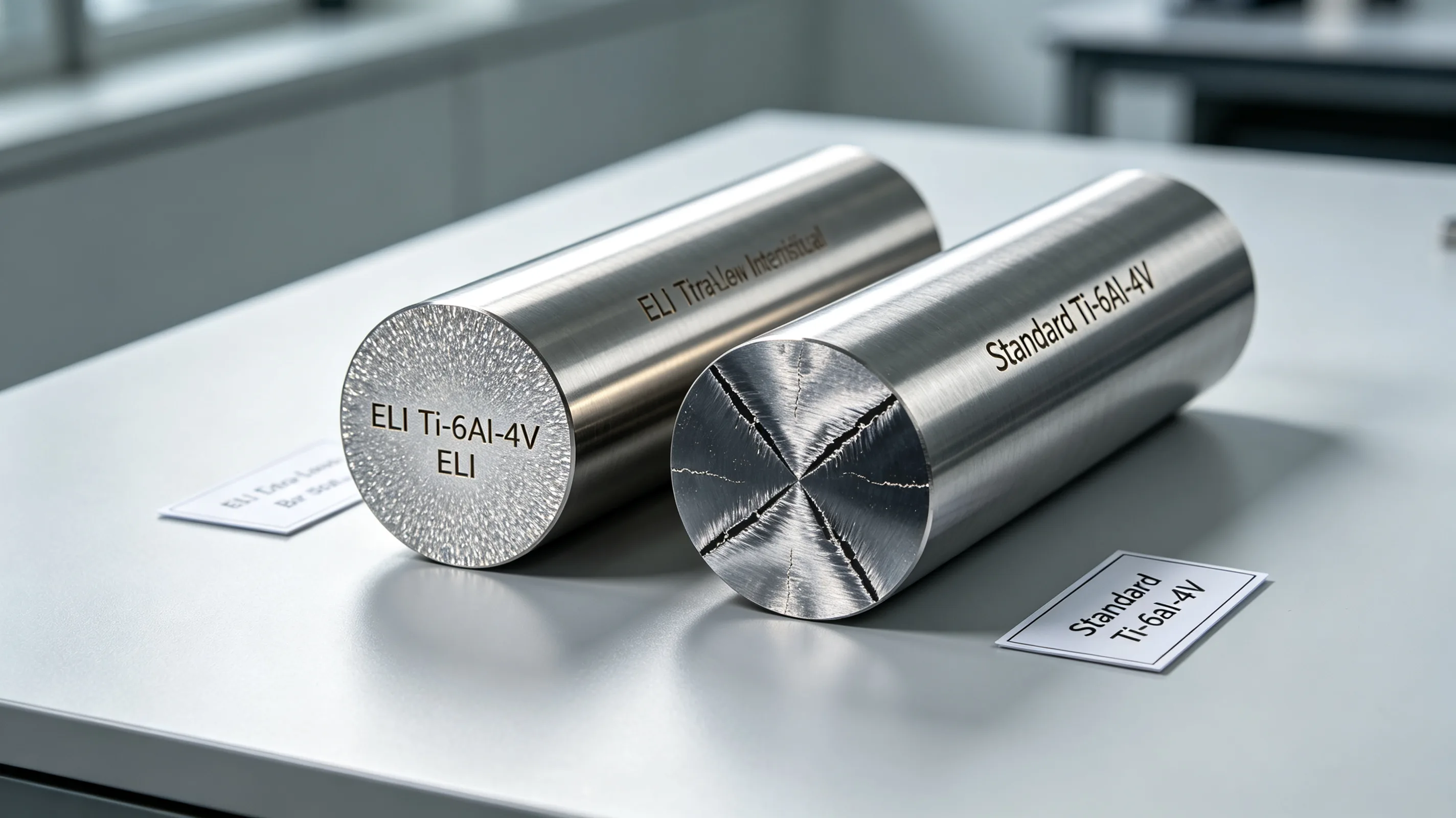
What Does ELI Mean in Titanium? Extra-Low Interstitial Grades Explained
A technical explanation of Extra-Low Interstitial (ELI) titanium — what ELI means, which grades have ELI variants, the effect of reduced interstitial content on mechanical properties, applicable standards for each ELI grade, and procurement guidance for specifying ELI material correctly in medical, cryogenic, and aerospace applications.
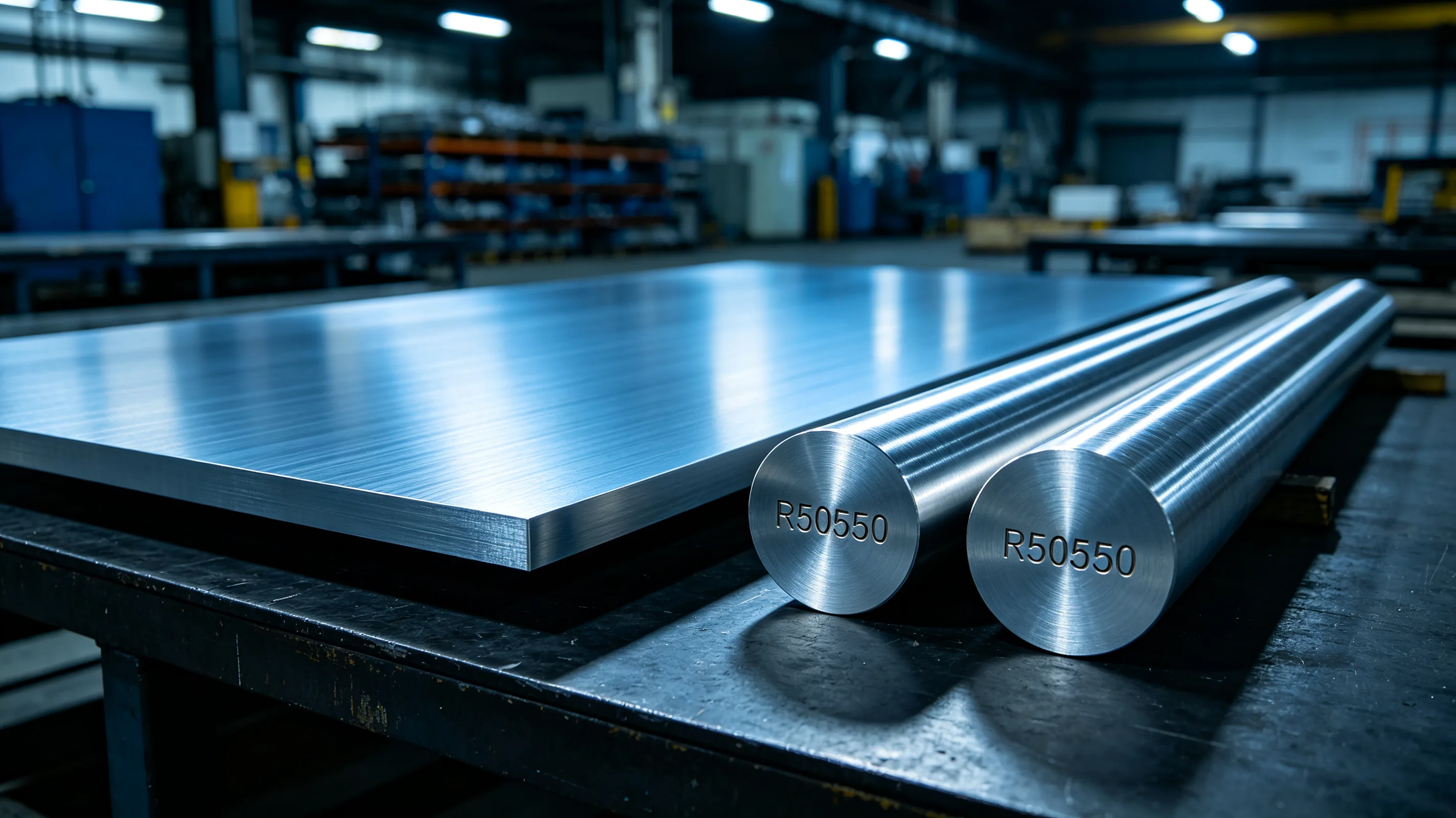
What Is Grade 3 Titanium? Properties, Composition, and Applications
An engineering guide to Grade 3 commercially pure titanium (UNS R50550, CP-Ti Grade 3) — mechanical properties, oxygen-controlled classification, applicable ASTM and AMS standards, machining behavior, procurement considerations, and application-specific selection criteria for chemical processing, marine, and industrial components.
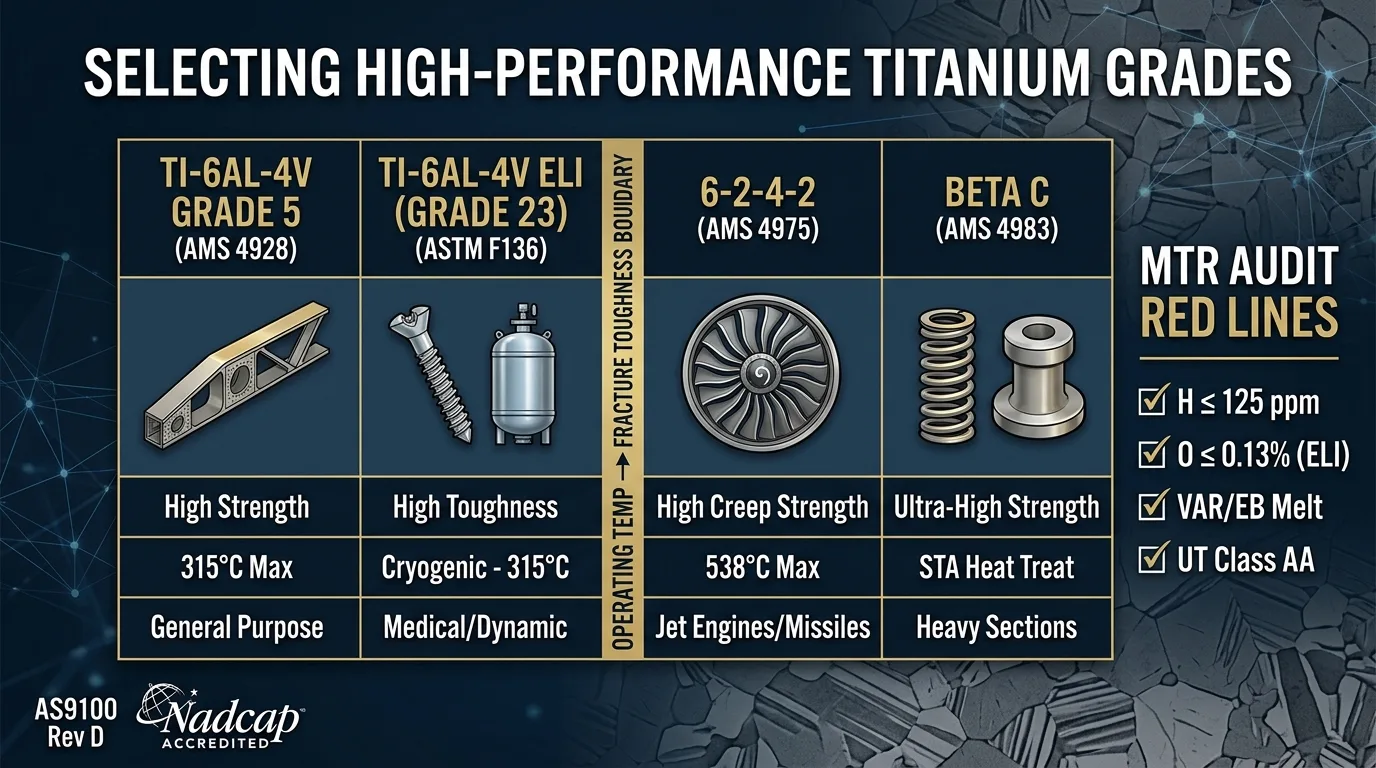
Selecting High-Performance Titanium Grades for Extreme Stress & Thermal Environments — Ti-6Al-4V (Grade 5) vs. Ti-6Al-4V ELI (Grade 23) vs. 6-2-4-2 vs. Beta Alloys
A technical DFM, metallurgical evaluation, and quality assurance guide for aerospace, defense, and high-reliability procurement — comparing Ti-6Al-4V Grade 5, Grade 23 ELI, 6-2-4-2, and Beta alloys for extreme stress and thermal environments.
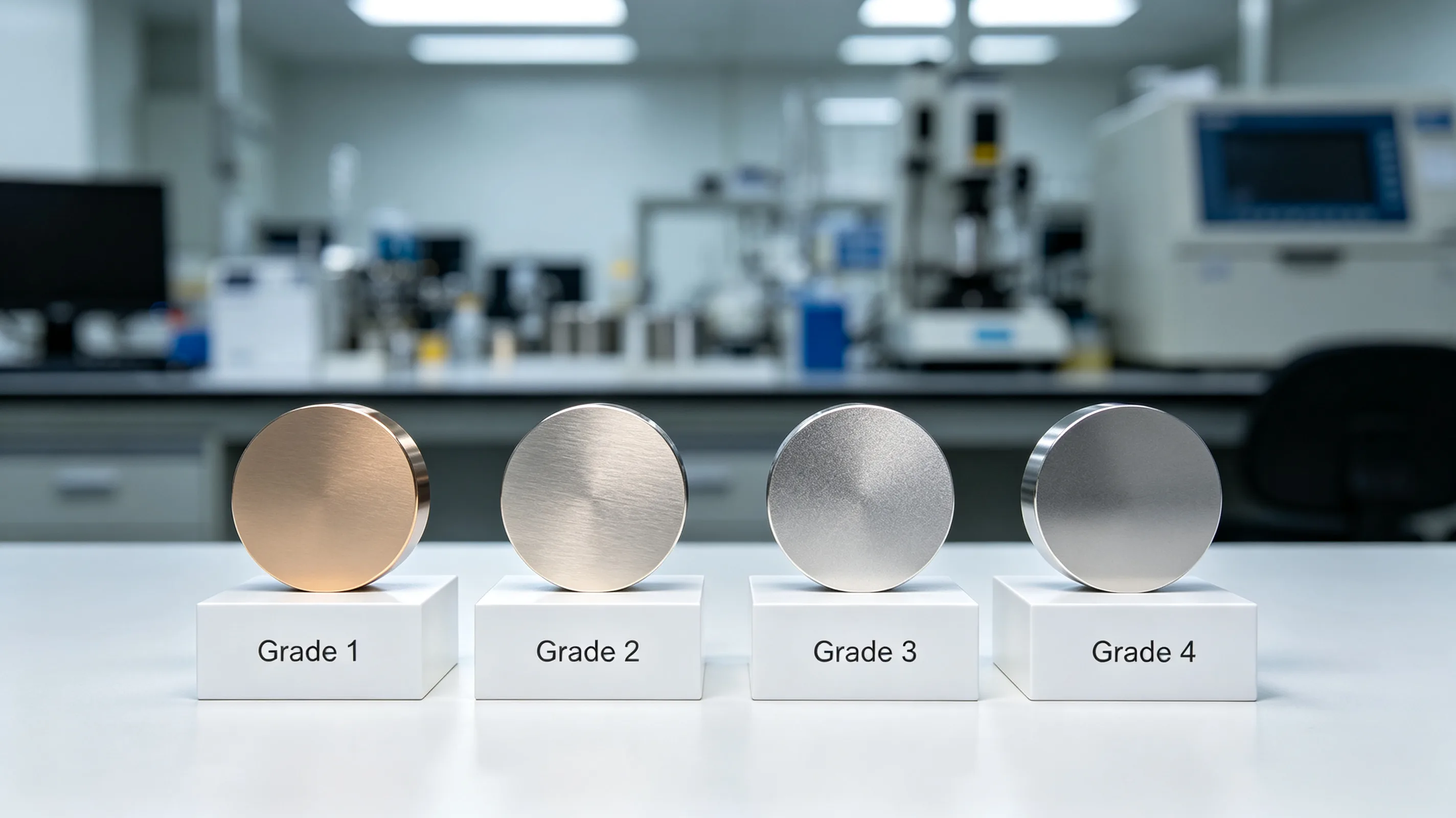
CP Titanium Grades 1-4 Comparison — Selecting Commercially Pure Titanium
A practical comparison of commercially pure titanium grades 1 through 4 — how oxygen content controls strength and ductility, typical applications for each grade, and selection criteria based on formability, corrosion resistance, and cost requirements.
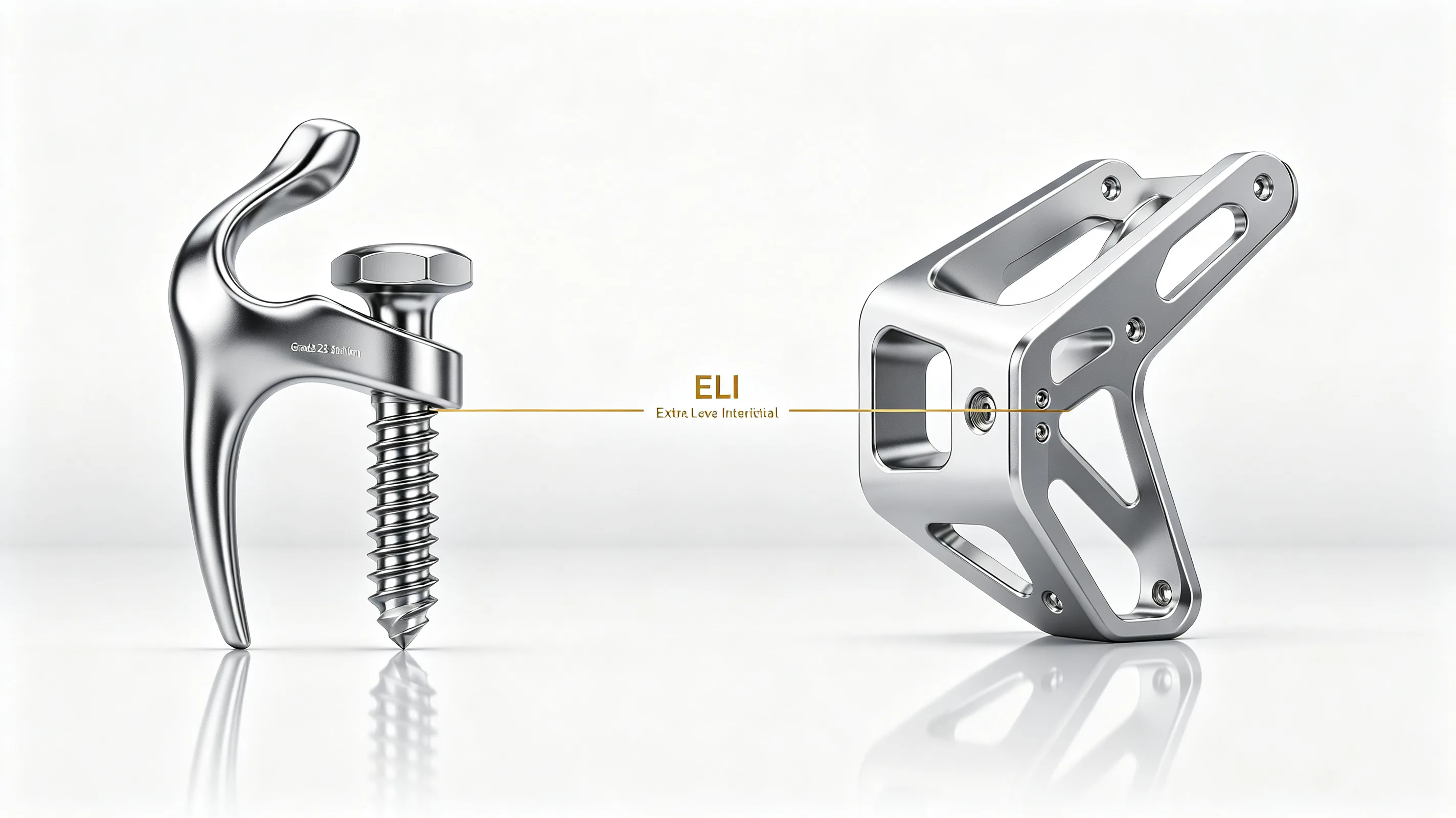
Grade 23 Titanium (Ti-6Al-4V ELI) for Medical Implants and Aerospace Applications
An engineering guide to Grade 23 titanium (Ti-6Al-4V ELI) — the reduced interstitial version of Grade 5 with improved fracture toughness and ductility. Mechanical properties, biocompatibility considerations, machining characteristics, and applications in medical implants and aerospace components.
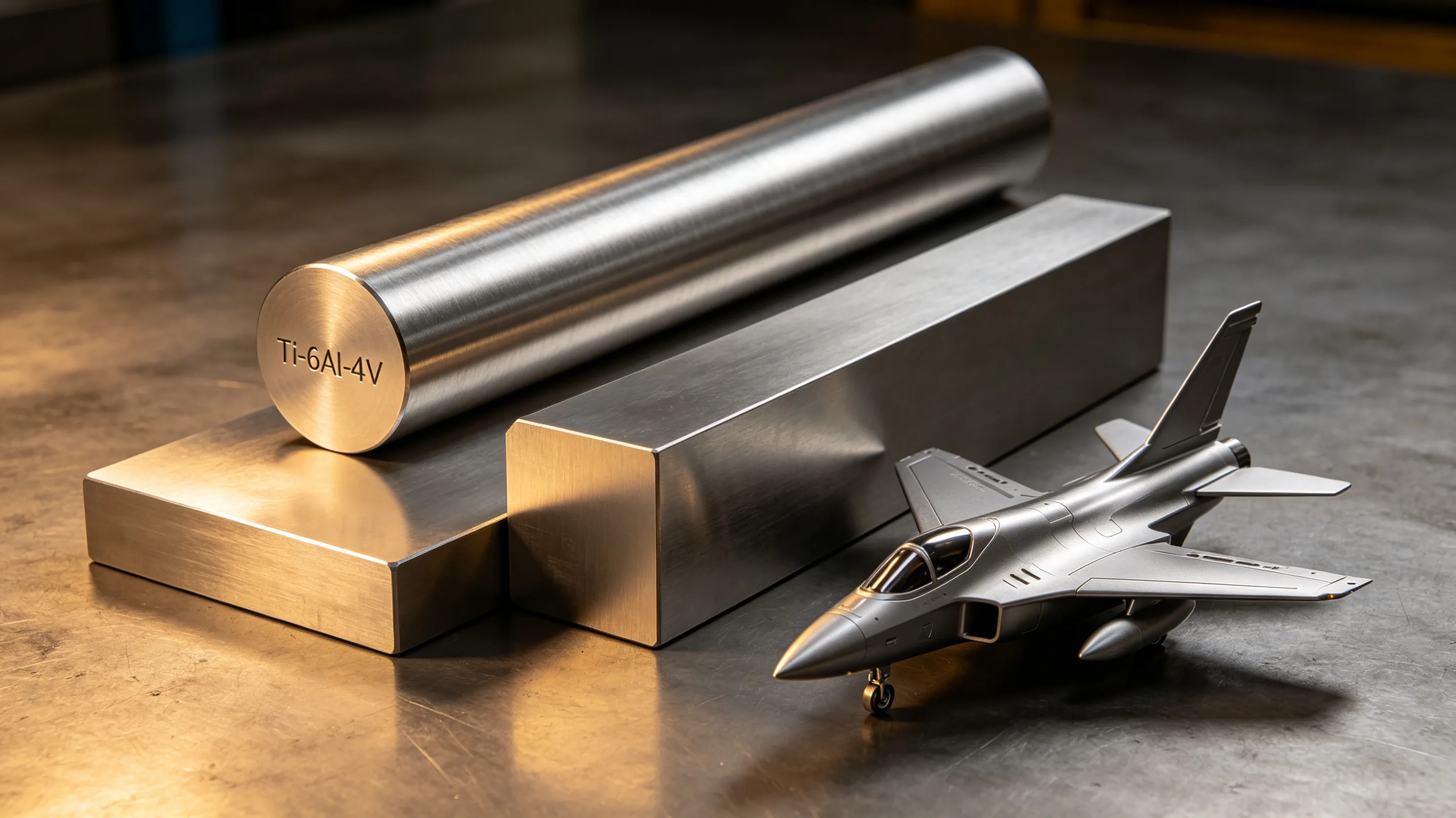
Ti-6Al-4V Grade 5 Titanium — Properties, Machining, and Applications Guide
An engineering guide to Ti-6Al-4V Grade 5 titanium — the most widely used titanium alloy. Mechanical and physical properties, heat treatment responses, machinability characteristics, and application-specific considerations for aerospace, medical, and industrial components.
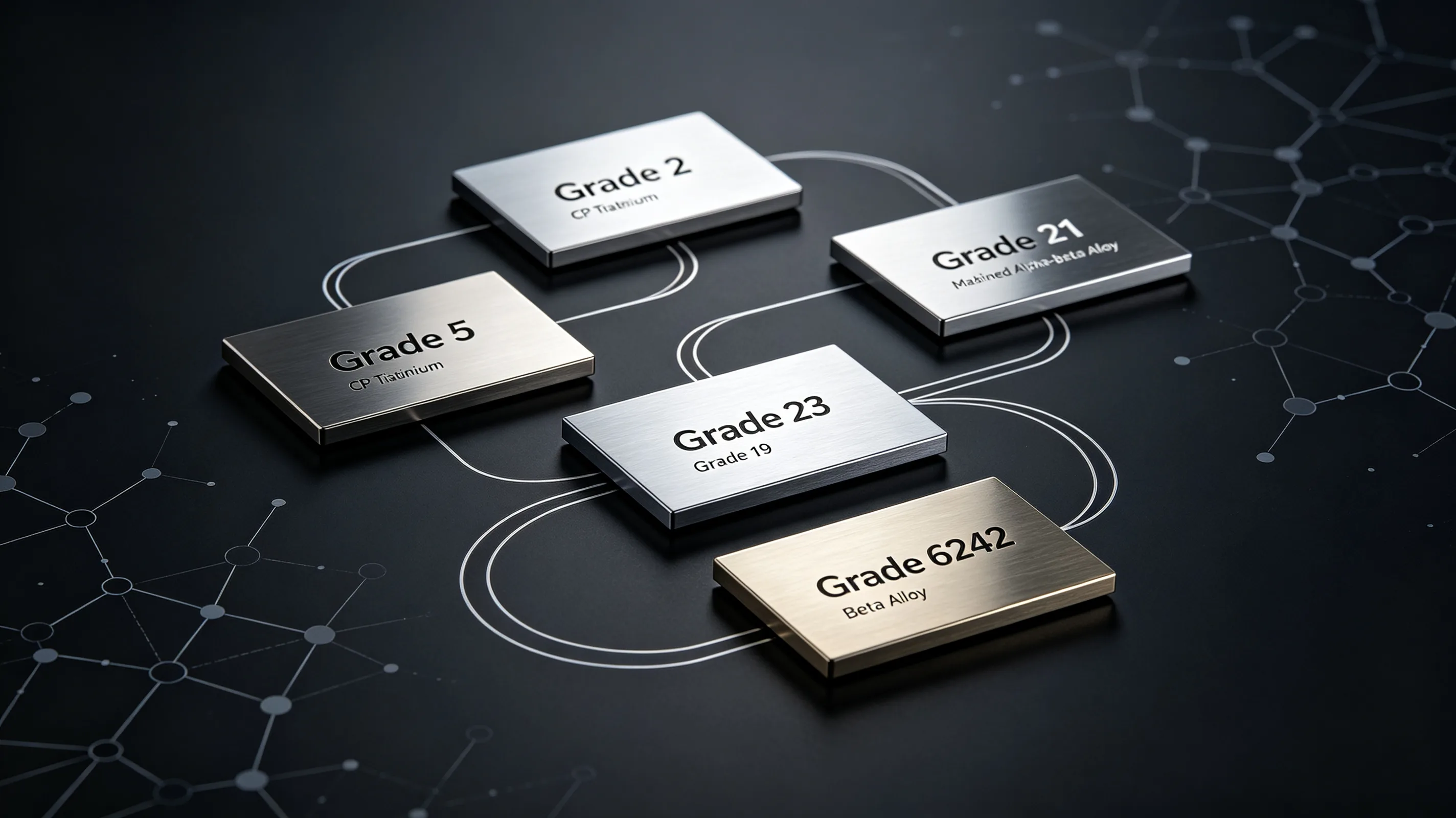
Titanium Alloy Selection Guide — How to Choose the Right Grade for Your Application
An engineering decision guide for titanium alloy selection — a systematic framework for choosing between CP grades, alpha-beta alloys, and beta alloys based on strength requirements, corrosion environment, operating temperature, manufacturing process constraints, and cost considerations.
Need help with materials & grades?
Send your drawing and specifications — our engineers will recommend the right approach within 24 hours.
Request a QuoteOne Metal. One Focus. Infinite Precision.
Founded in 2011 in Baoji's Titanium Valley, BOZE Metal is dedicated exclusively to titanium — from raw material to precision engineering. AS9100D, ISO 13485 & ISO 9001 certified with 500+ clients across Aerospace, Medical & Motorsport industries, we deliver end-to-end precision titanium CNC machining with full material traceability from source to component.
Boze Titanium Manufacturing Center is operated by Baoji Boze Metal Products Co., Ltd.
Certifications verified by NADCAP and compliant with ASTM International titanium standards (B265, B348, B381, F136, F2924) and ISO 13485 medical-device QMS.