Manufacturing Problems
All manufacturing problems articles from the Boze Titanium Manufacturing Center — engineering guides, case studies, and manufacturing insights for buyers and engineers.
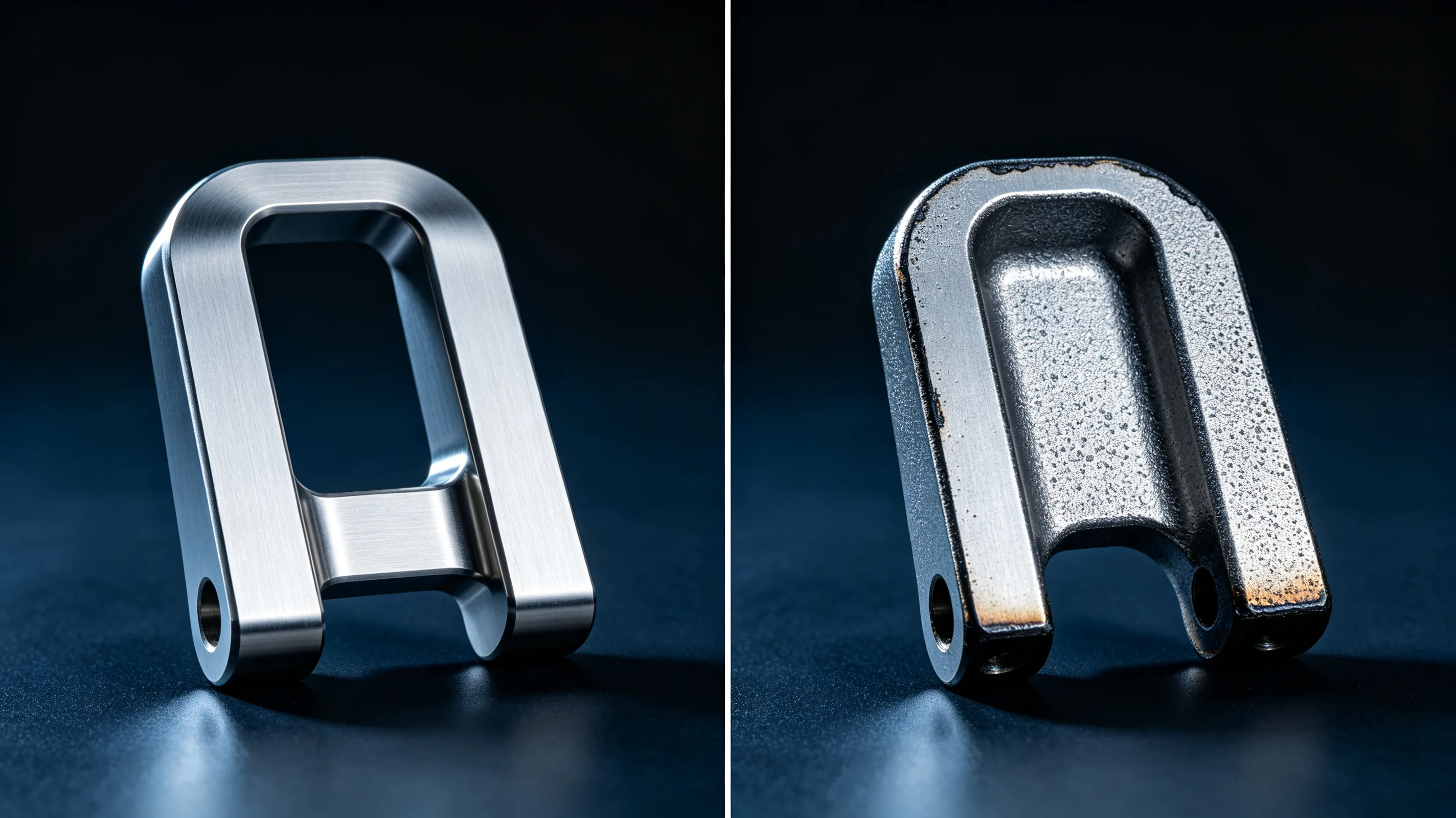
How to Machine Thin-Wall Titanium Parts Without Distortion
Engineering strategies for machining thin-wall titanium parts without distortion — process sequencing, toolpath control, fixture design, and in-process compensation for stable dimensions.
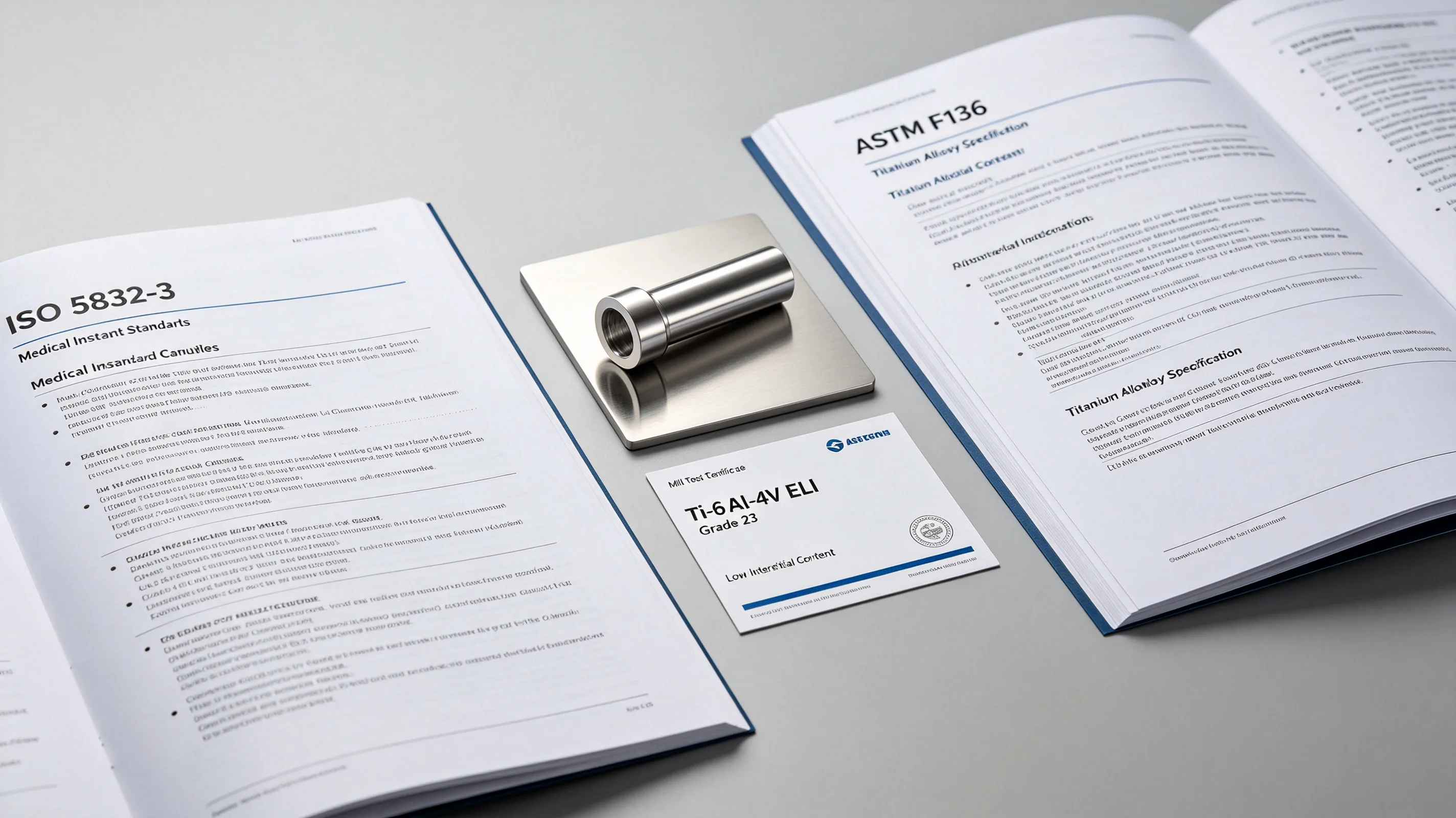
Is Titanium Difficult to Machine? A Practical Guide to Titanium Machinability
A practical guide to titanium machinability — how titanium compares to aluminum, steel, and stainless steel, what makes it harder to cut, and when the difficulty justifies the performance benefits in aerospace, medical, and industrial applications.
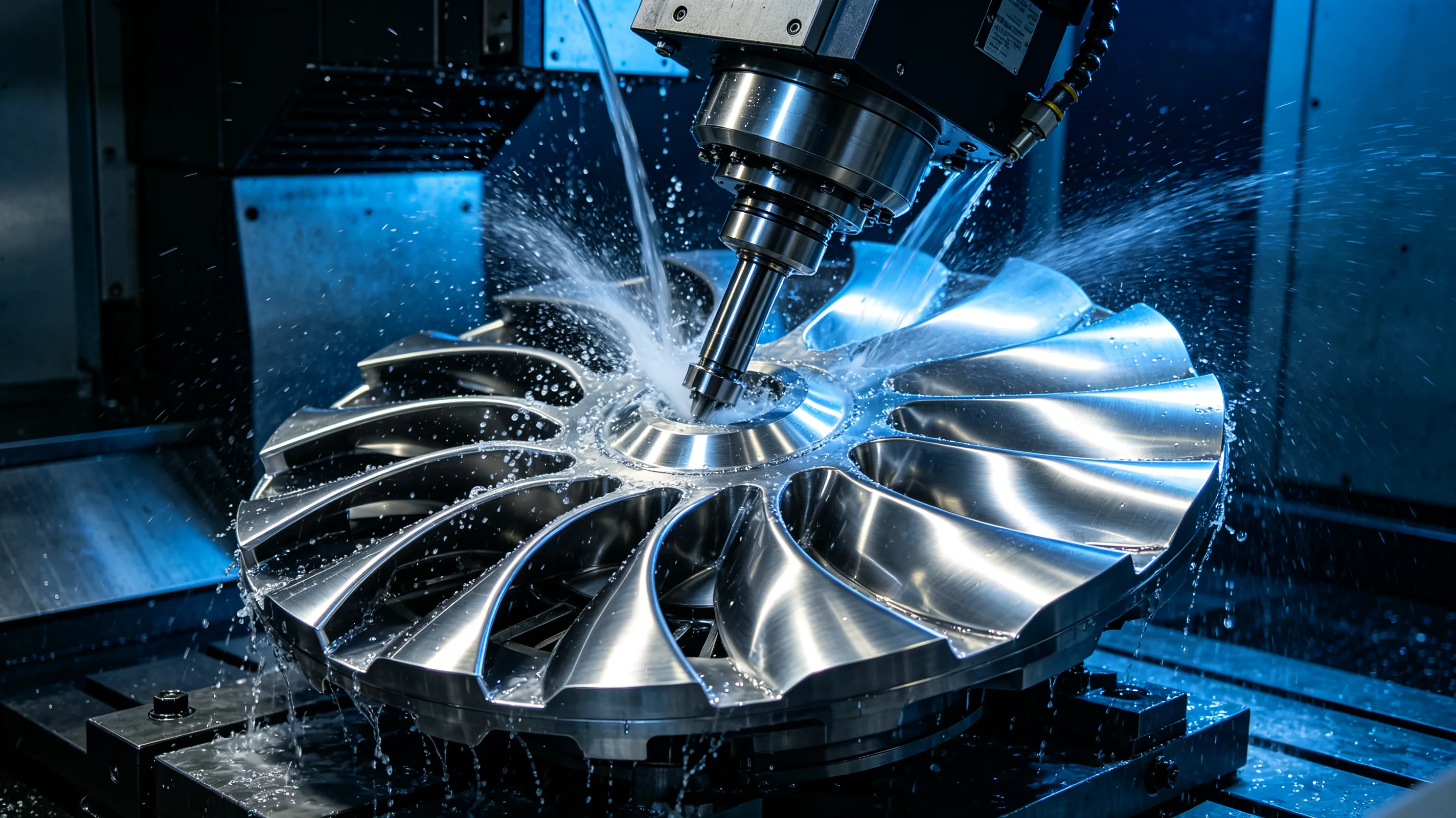
5-Axis Machining for Titanium Parts: When Is It Necessary?
A decision guide for 5-axis titanium machining — when complex geometry, tight tolerances, and setup reduction justify 5-axis over 3-axis, and how to evaluate cost and capability.
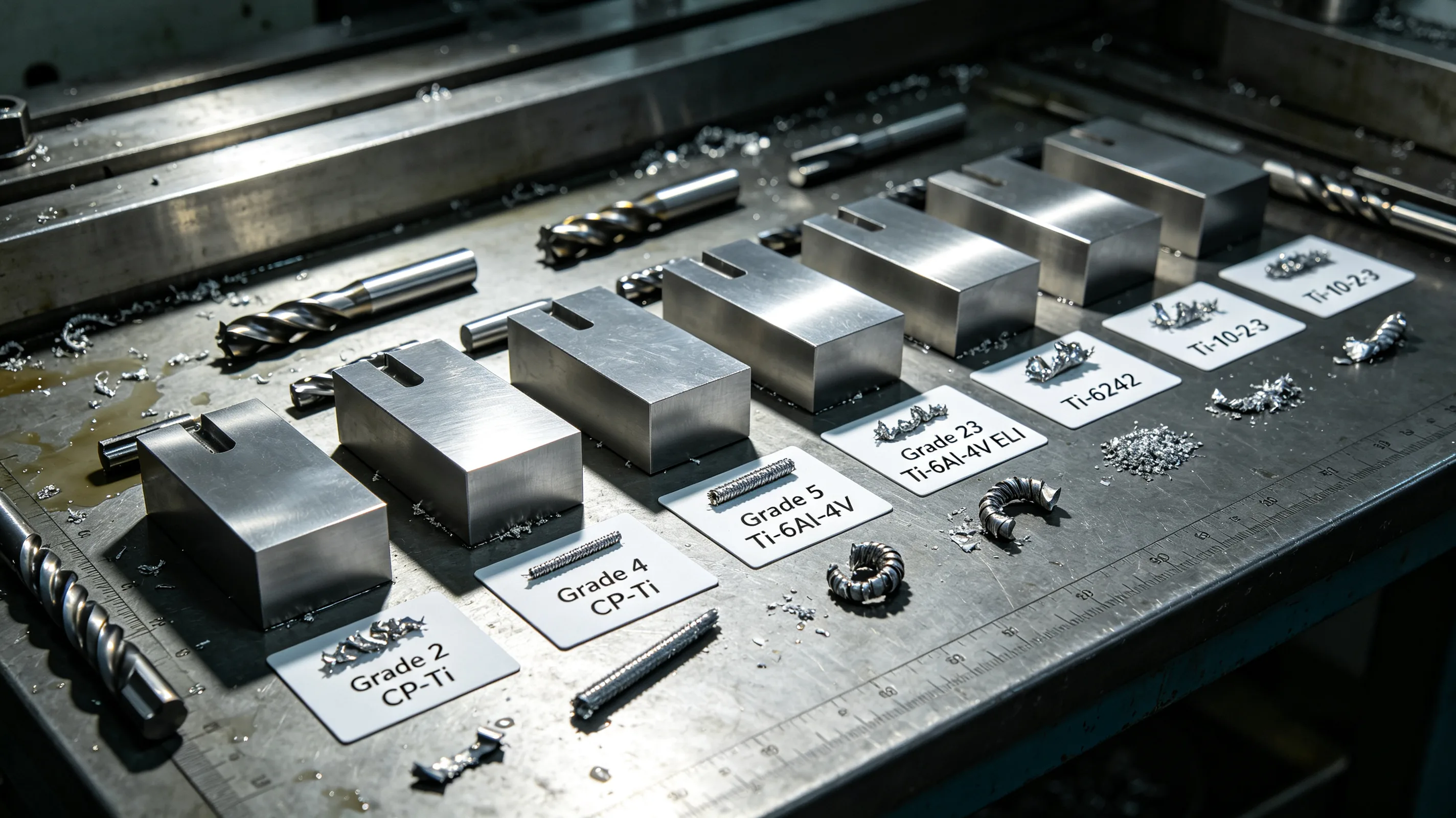
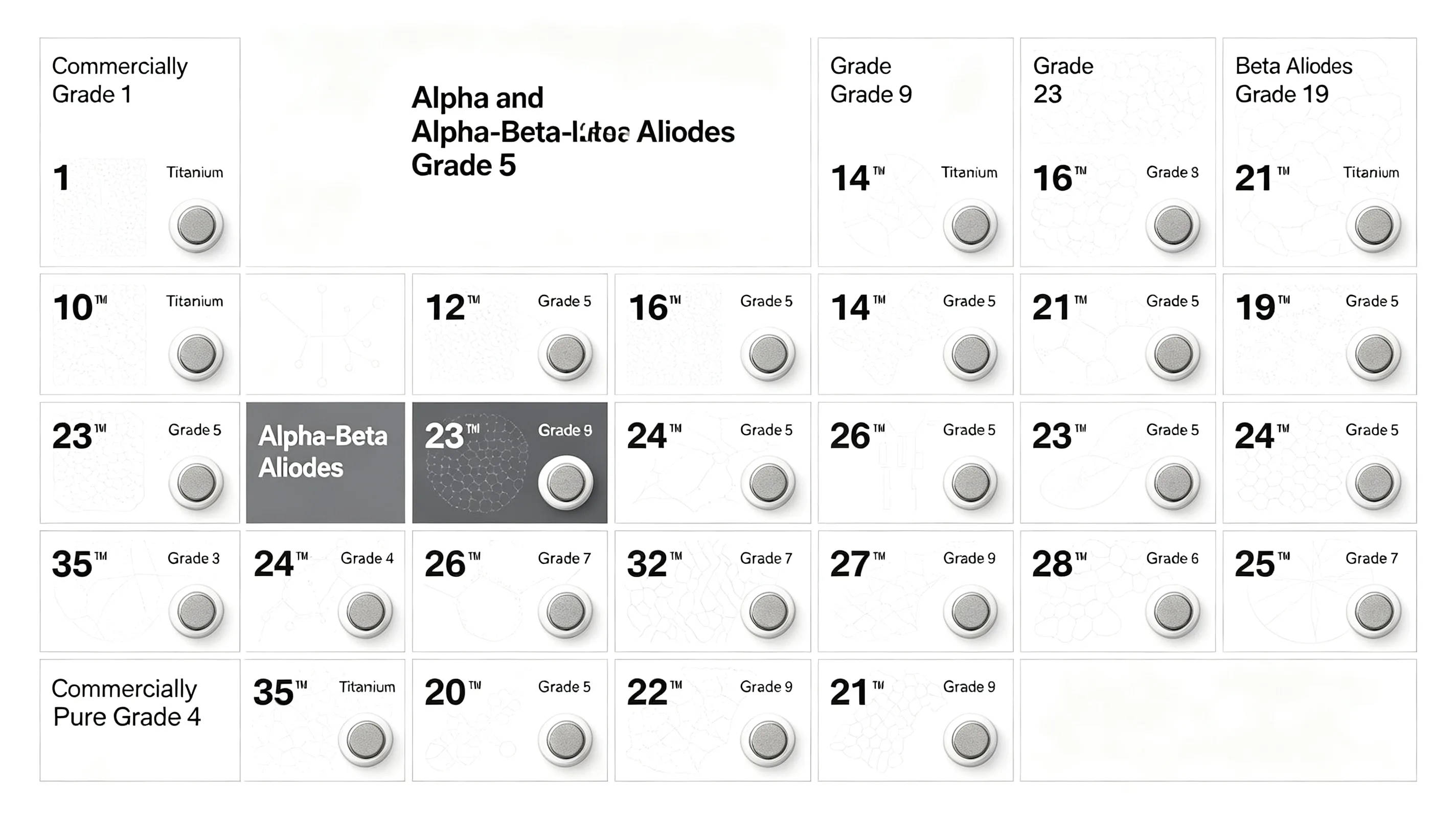
Titanium Machinability Rating: How Different Titanium Grades Compare
A comparative guide to titanium machinability ratings across commercially pure grades, alpha-beta alloys, and beta alloys. Understand how grade selection affects cutting speed, tool life, and process cost.
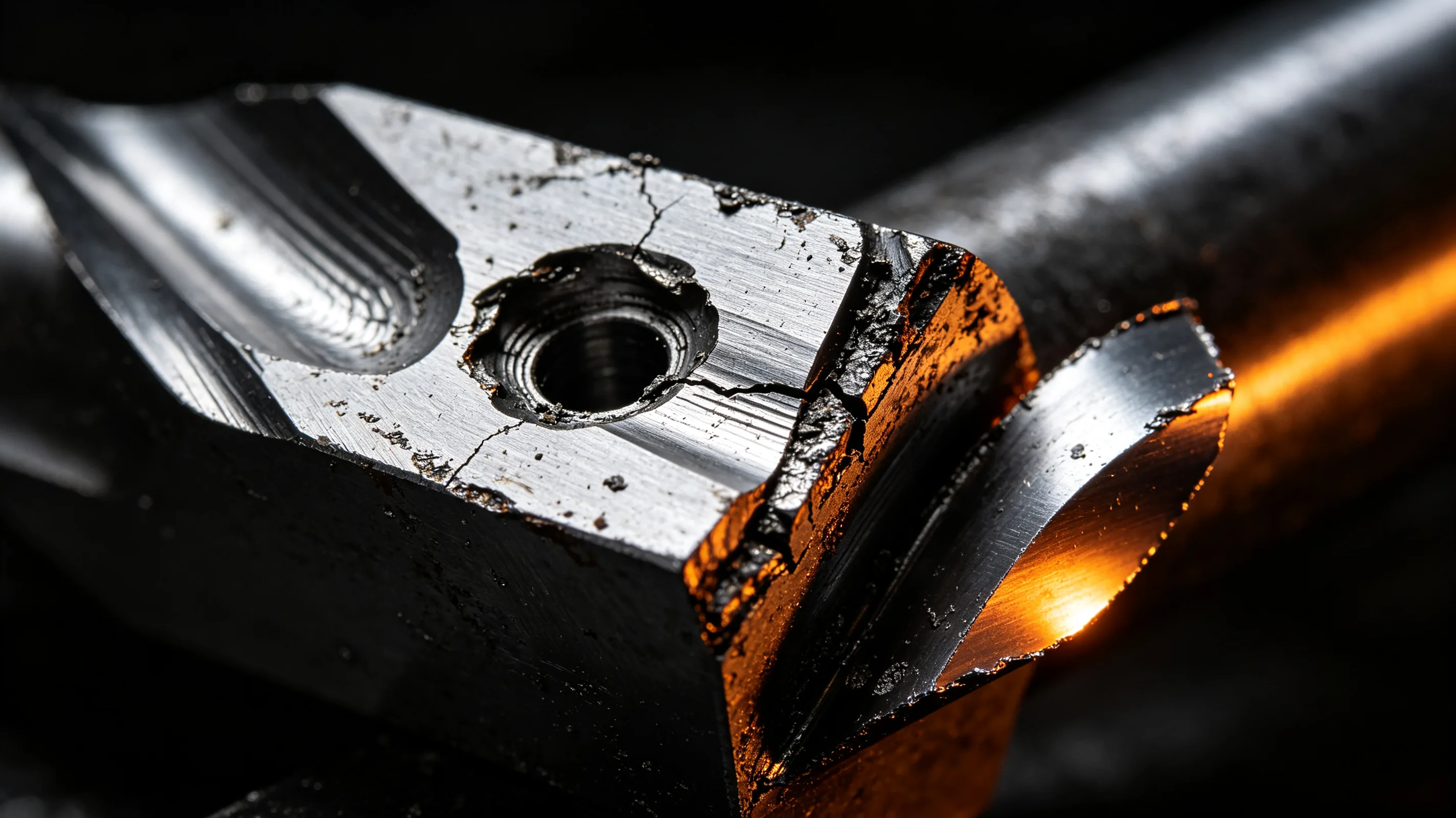
Why Is Titanium Hard to Machine? Heat, Work Hardening and Tool Wear Explained
An engineering explanation of why titanium is hard to machine — how heat concentration, work hardening, and tool wear interact during cutting, and what this means for tool selection, cutting parameters, and process stability.
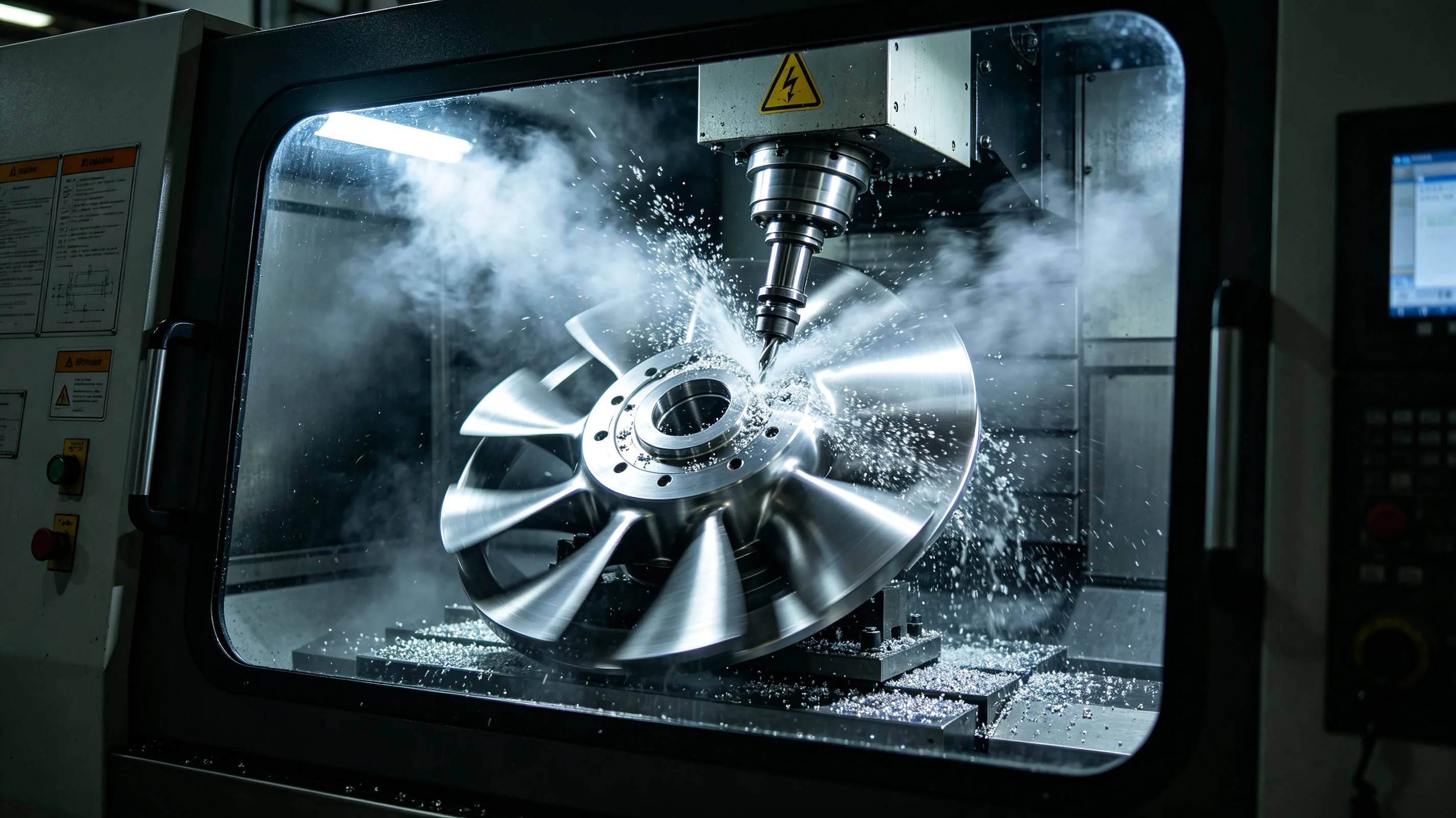
5-Axis Titanium Machining Best Practices for Complex Aerospace Components
An engineering analysis of 5-axis machining strategies for titanium components — tool orientation principles for rigid cutting conditions, chip load management in complex toolpaths, thermal distribution across multi-axis moves, and programming approaches that leverage the machine's full capability while managing titanium's unique machining characteristics.

Alpha Case Formation in Titanium: Prevention and Removal
An engineering analysis of alpha case formation during titanium heat treatment and machining - the oxygen-enriched surface layer that embrittles titanium above 400 degC, how it affects part performance, and the process controls needed to prevent or remove it.
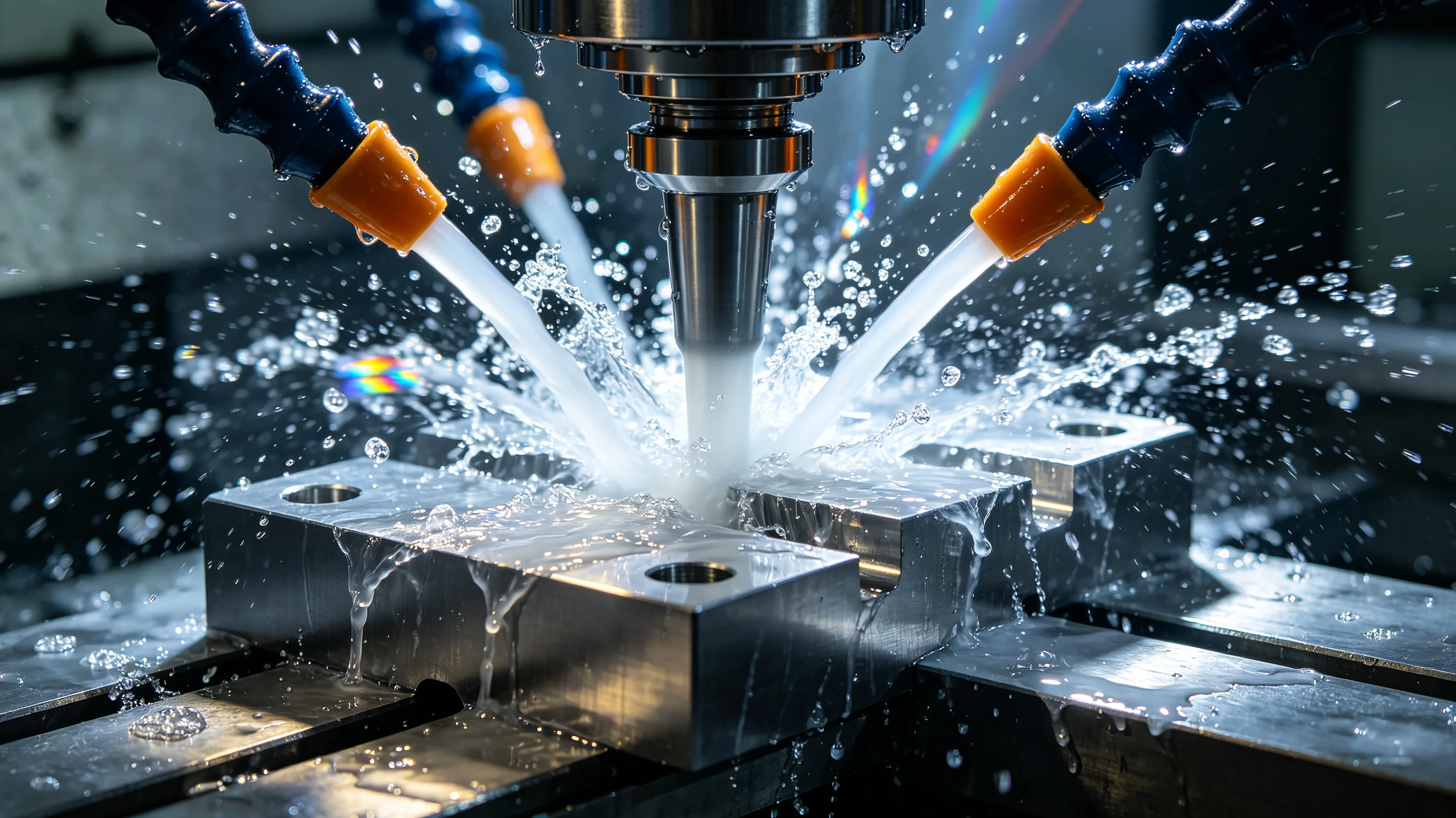
High Pressure Coolant Strategy for Titanium CNC Machining
An engineering analysis of coolant strategy in titanium CNC machining — why high-pressure through-spindle coolant above 50 bar is necessary for thermal management and chip evacuation, concentration and temperature control requirements, and how coolant system capability affects process stability and tool life.
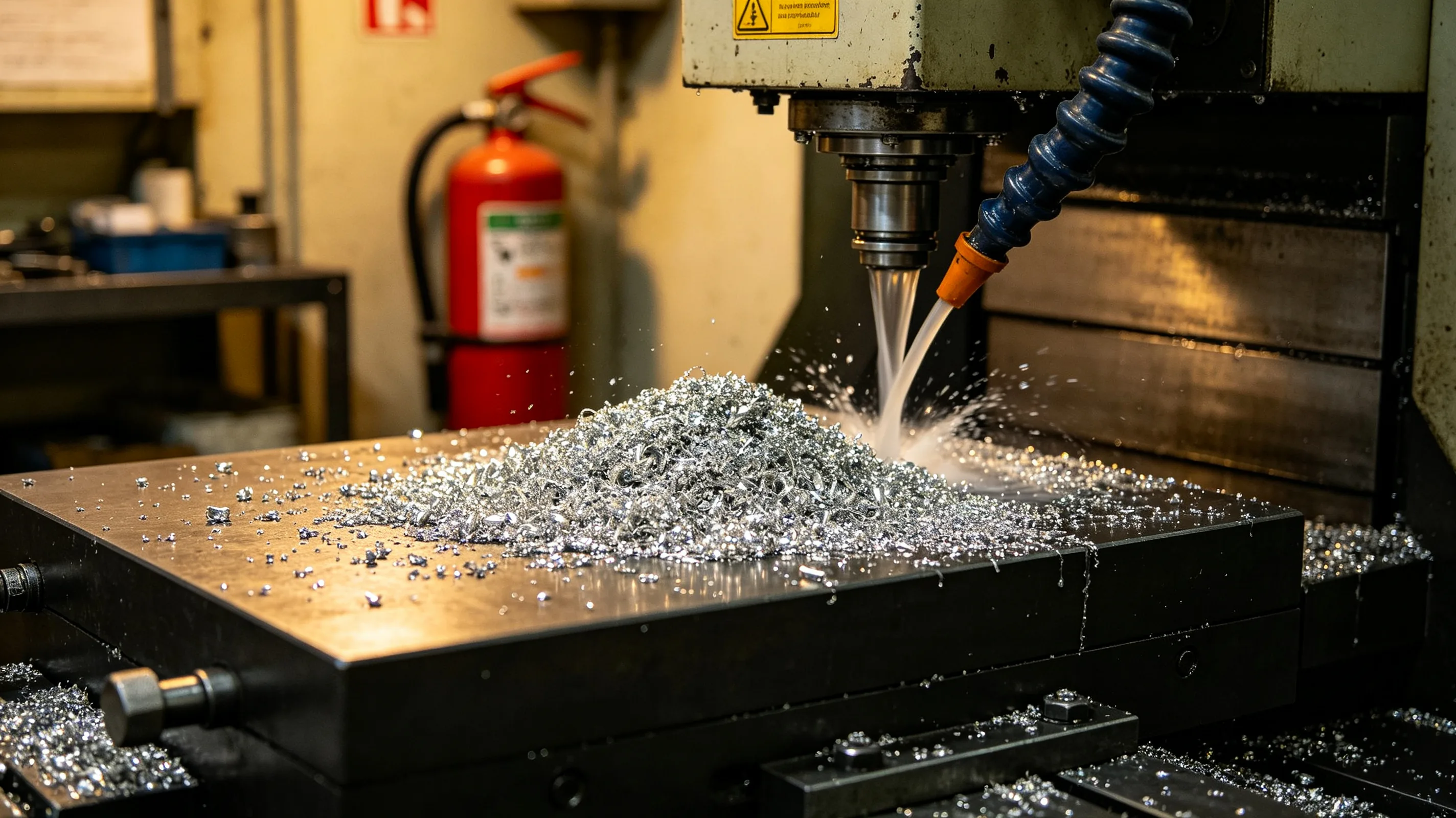
Titanium Chip Control and Fire Prevention in CNC Machining
An engineering analysis of titanium chip management and fire risk — why titanium chips are uniquely flammable, the conditions that lead to chip fires, chip formation and evacuation strategies for drilling and milling, and coolant system requirements that prevent ignition events.
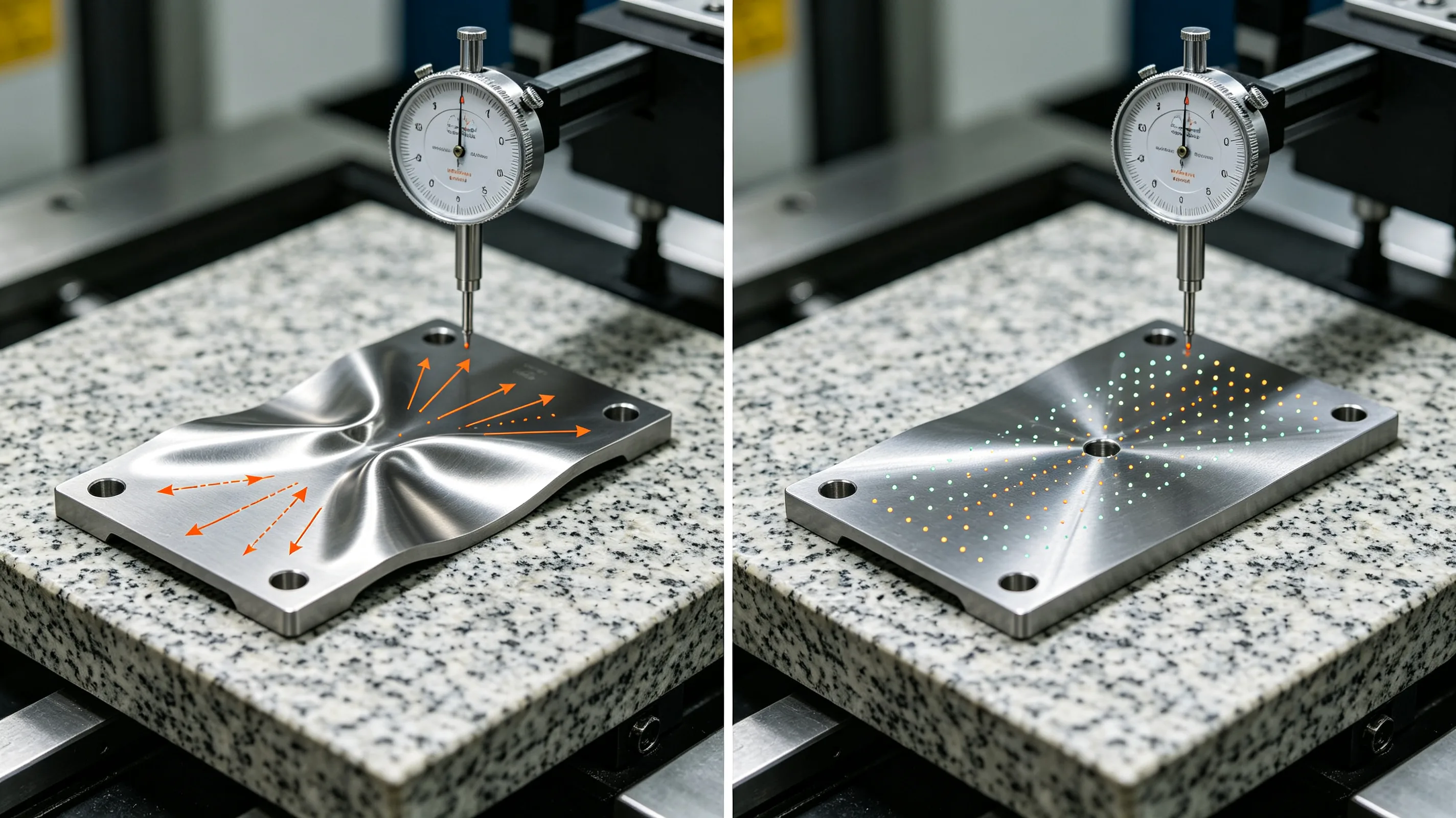
Titanium CNC Machining Deformation: Causes and Prevention
An engineering analysis of why titanium parts deform during CNC machining — thermal expansion from low thermal diffusivity, mechanical springback from low elastic modulus, residual stress redistribution in thin-wall features, and fixturing and toolpath strategies that maintain dimensional stability.
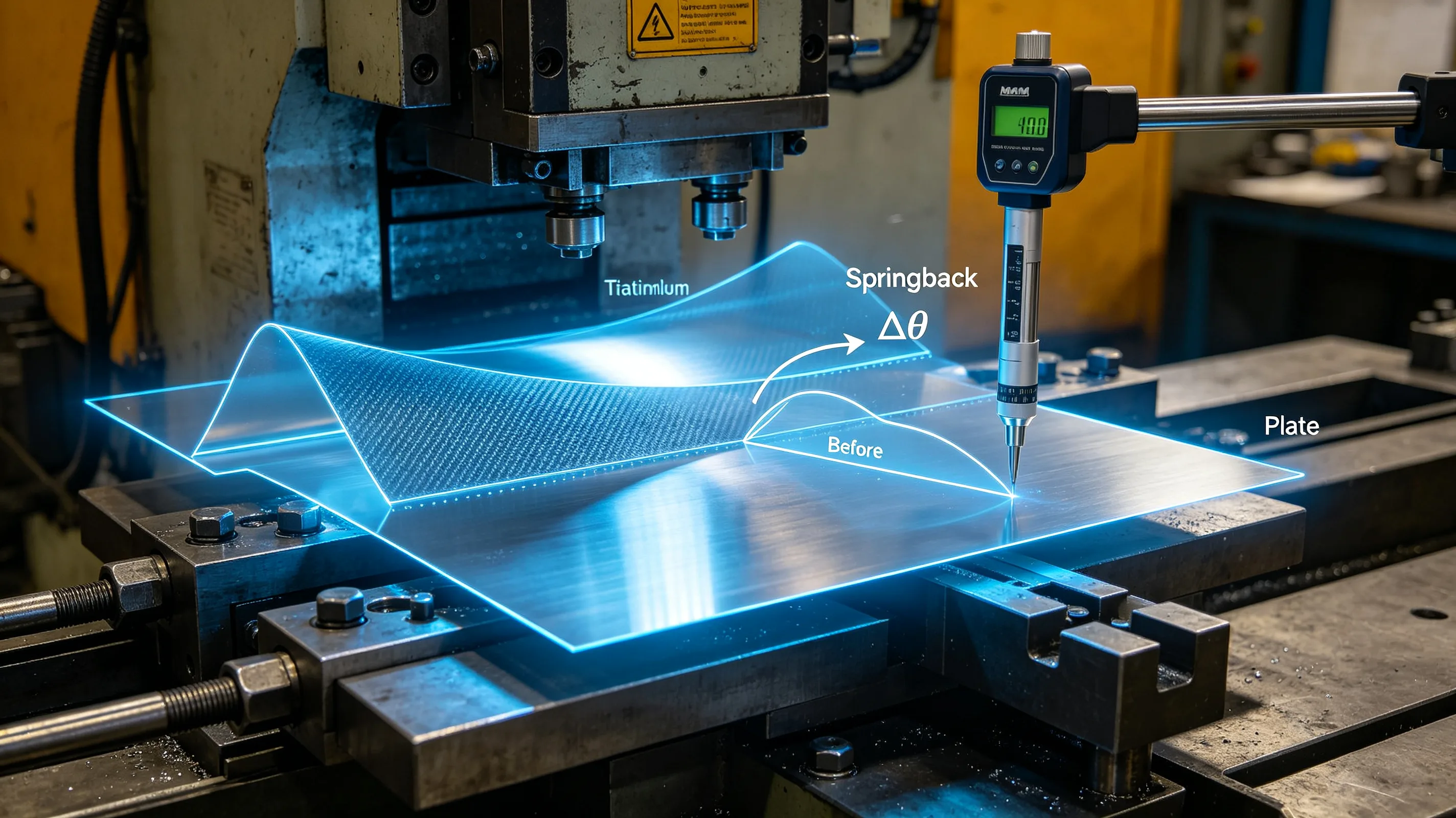
Titanium Springback Compensation Strategies in CNC Machining
An engineering analysis of elastic springback in titanium machining — why the low modulus of elasticity causes dimensional deviation in thin-wall and precision features, compensation methods in CAM programming, and toolpath strategies that account for elastic recovery.
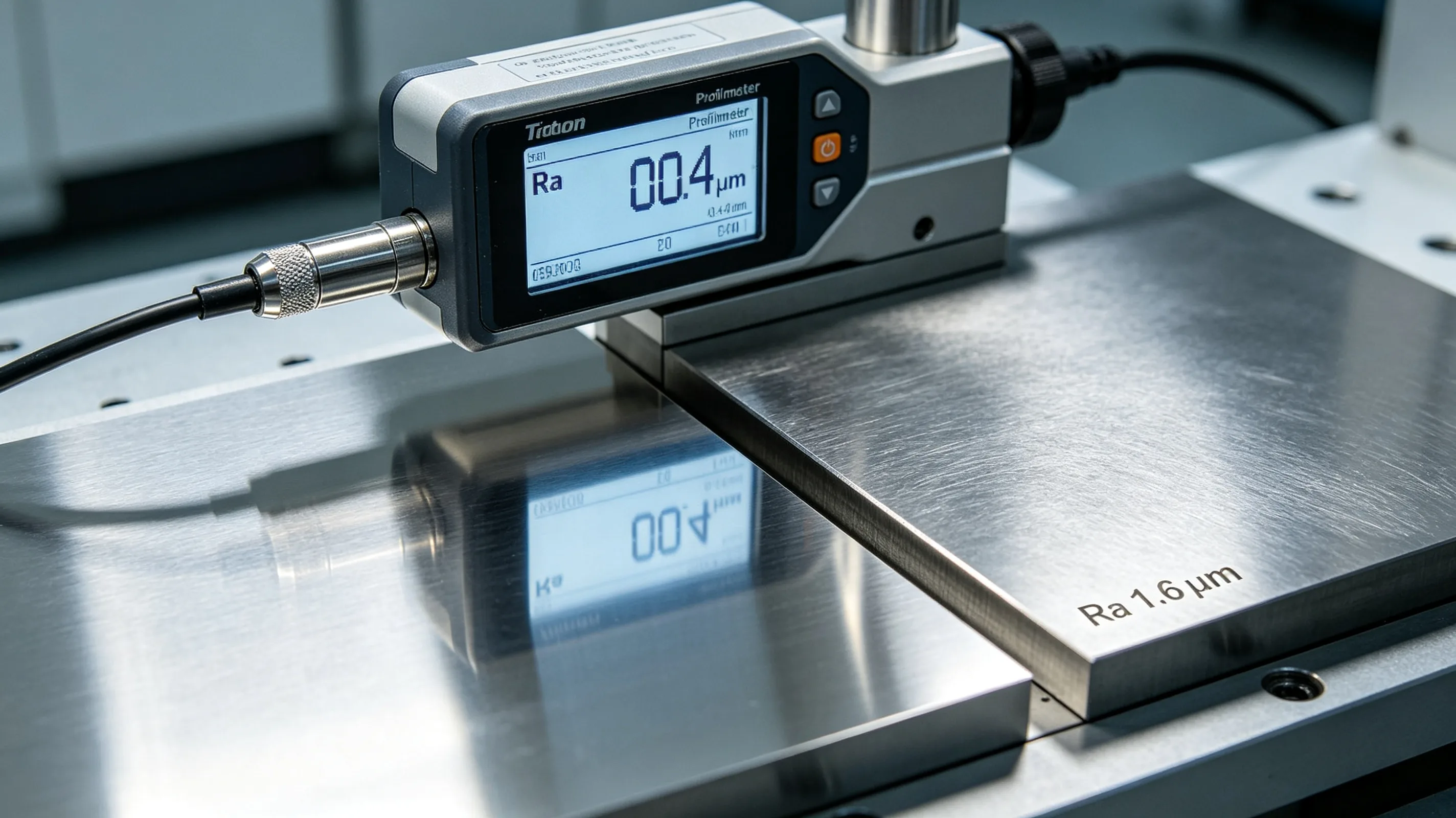
Titanium Surface Finish: Achieving Ra 0.4μm in CNC Machining
An engineering analysis of surface finish generation in titanium CNC machining — how tool geometry, cutting parameters, and coolant strategy interact to determine achievable Ra values, the difference between roughness and surface integrity, and practical approaches for meeting aerospace and medical finish specifications.
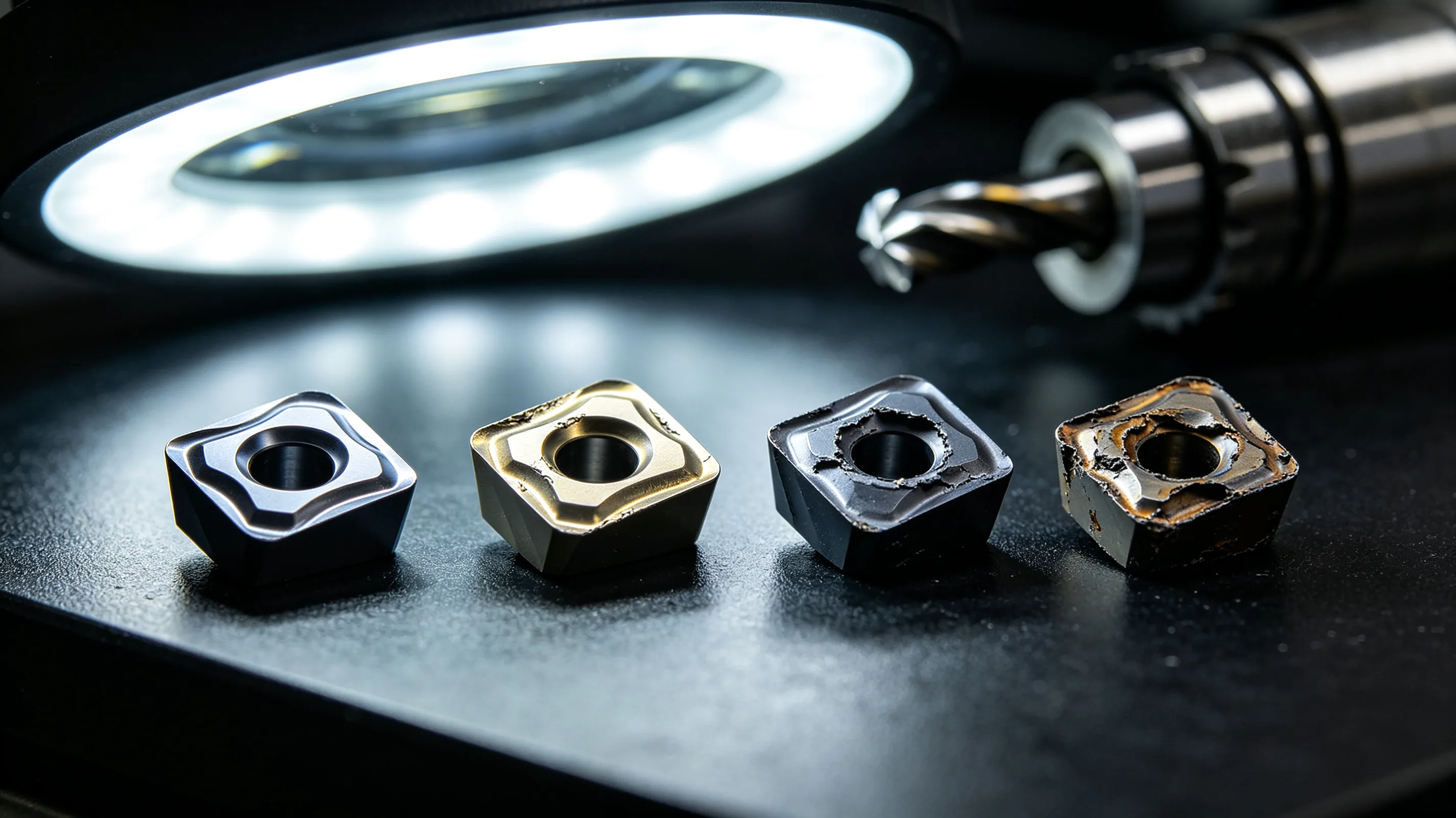
Titanium Tool Wear: Causes and Solutions — Adhesion, Diffusion, and Abrasion in CNC Machining
An engineering analysis of tool wear mechanisms in titanium CNC machining — adhesion and diffusion at elevated temperatures, abrasive wear from work-hardened surfaces, the relationship between cutting parameters and tool life, and practical carbide grade and coating selection criteria.
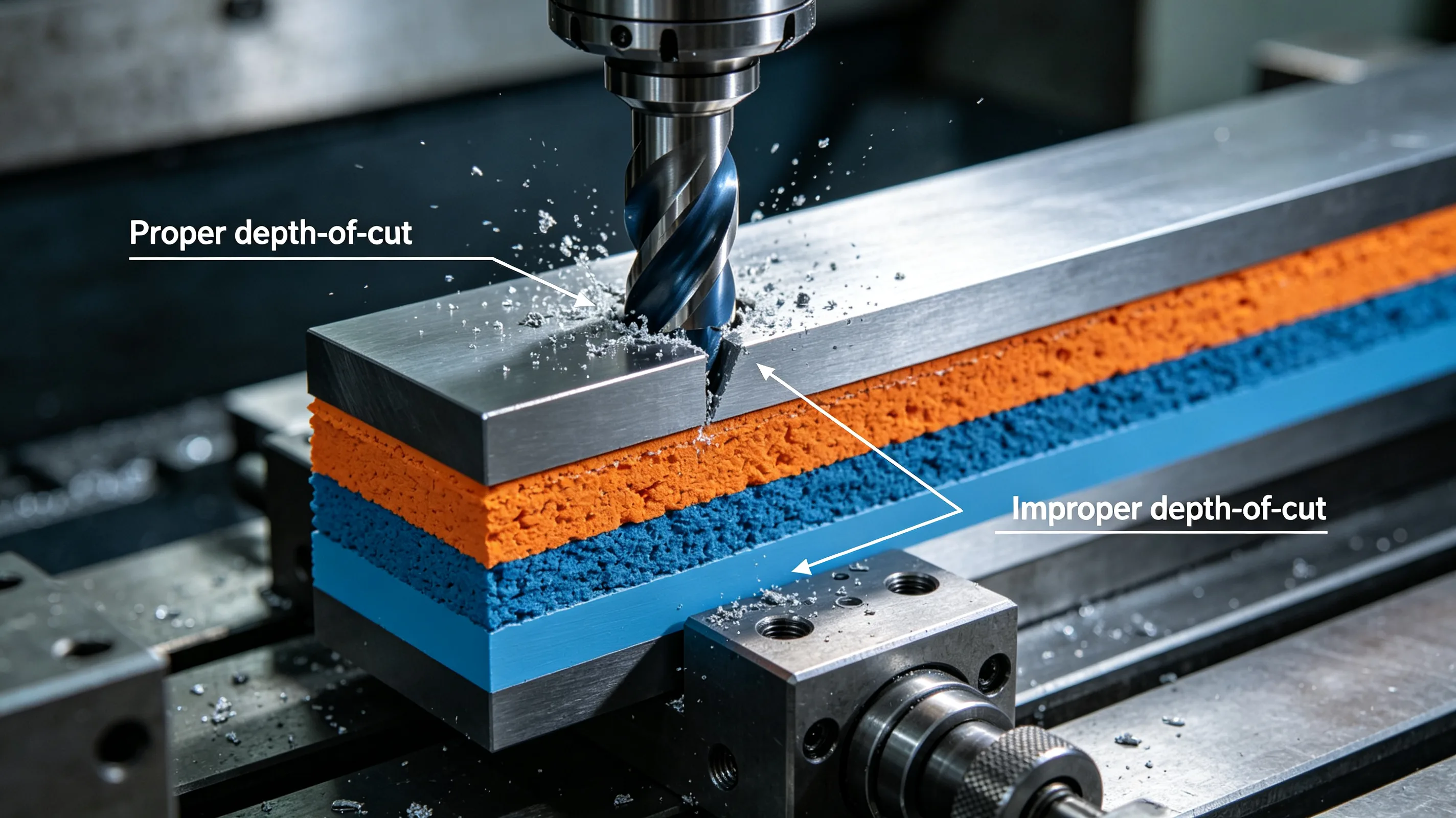
Titanium Work Hardening: How to Avoid — Causes, Effects, and Process Control in CNC Machining
An engineering analysis of work hardening in titanium CNC machining — how strain-induced subsurface hardening develops during cutting, why it accelerates tool wear and affects part quality, and what process parameters control hardened layer depth.
One Metal. One Focus. Infinite Precision.
Founded in 2011 in Baoji's Titanium Valley, BOZE Metal is dedicated exclusively to titanium — from raw material to precision engineering. AS9100D, ISO 13485 & ISO 9001 certified with 500+ clients across Aerospace, Medical & Motorsport industries, we deliver end-to-end precision titanium CNC machining with full material traceability from source to component.
Boze Titanium Manufacturing Center is operated by Baoji Boze Metal Products Co., Ltd.