More Titanium Manufacturing Articles
More titanium manufacturing articles — page 5 of 9. Engineering guides, case studies, procurement guidance, and manufacturing insights from the Boze Titanium Manufacturing Center.
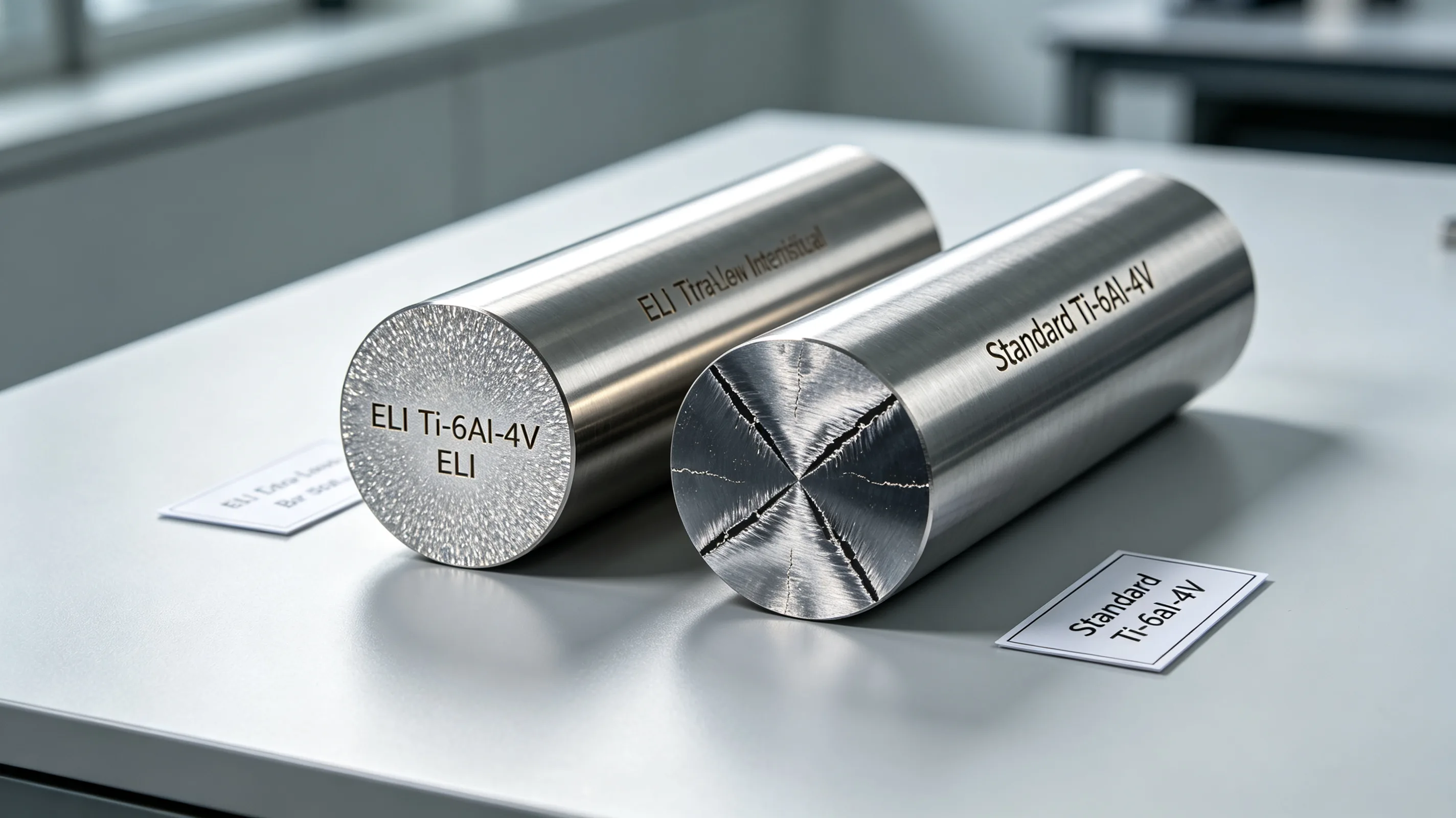
What Does ELI Mean in Titanium? Extra-Low Interstitial Grades Explained
A technical explanation of Extra-Low Interstitial (ELI) titanium — what ELI means, which grades have ELI variants, the effect of reduced interstitial content on mechanical properties, applicable standards for each ELI grade, and procurement guidance for specifying ELI material correctly in medical, cryogenic, and aerospace applications.
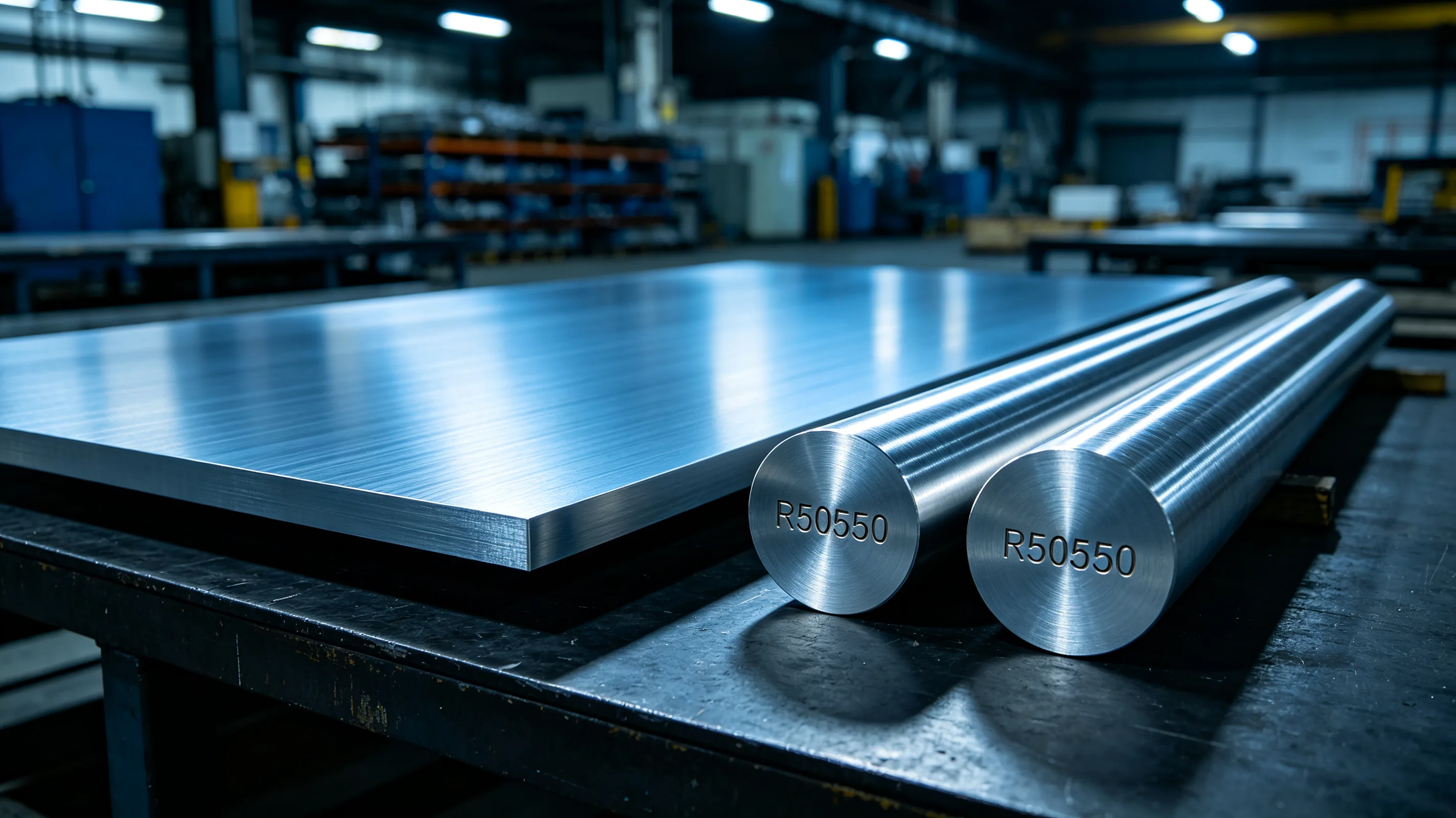
What Is Grade 3 Titanium? Properties, Composition, and Applications
An engineering guide to Grade 3 commercially pure titanium (UNS R50550, CP-Ti Grade 3) — mechanical properties, oxygen-controlled classification, applicable ASTM and AMS standards, machining behavior, procurement considerations, and application-specific selection criteria for chemical processing, marine, and industrial components.
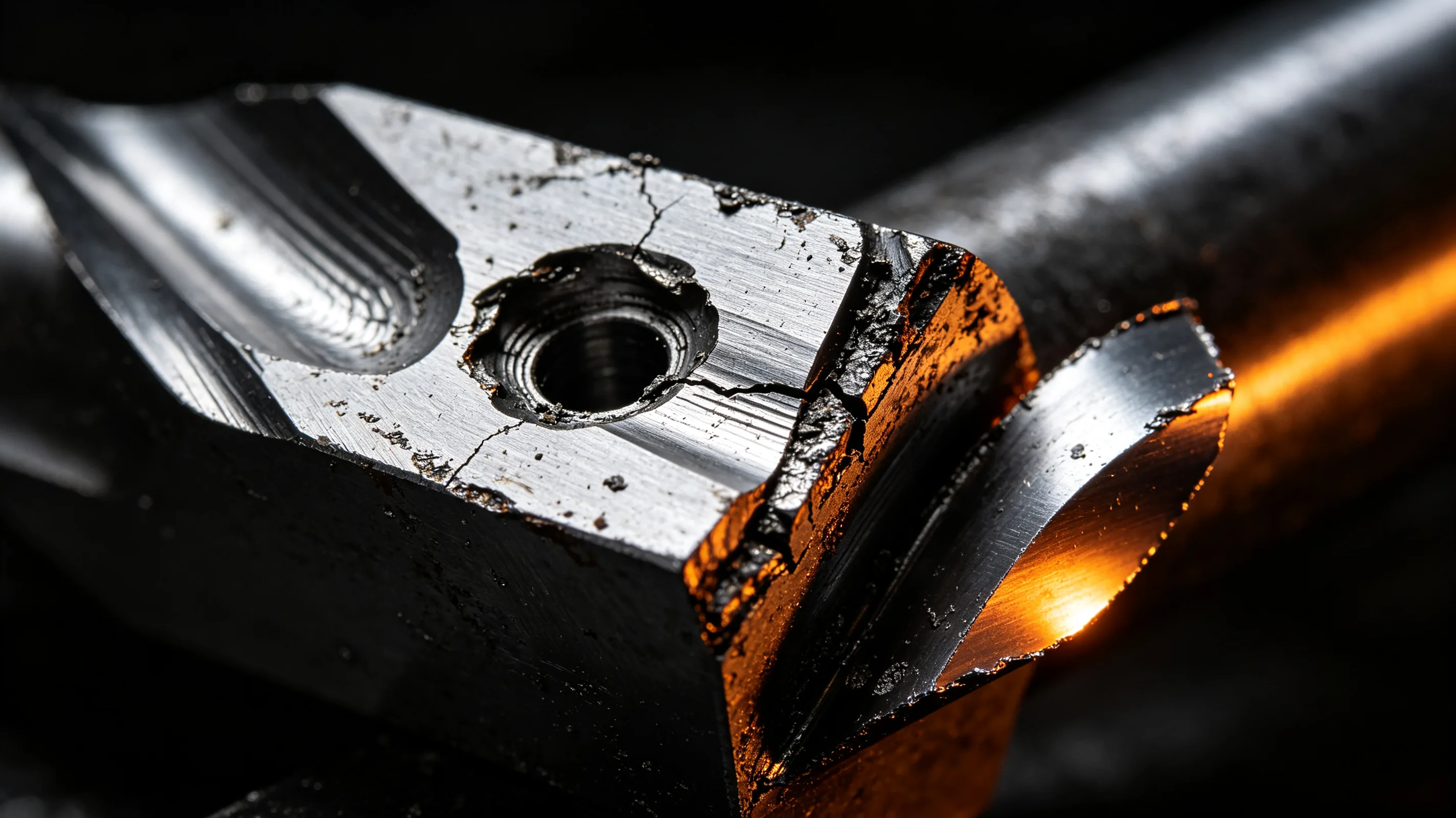
Why Is Titanium Hard to Machine? Heat, Work Hardening and Tool Wear Explained
An engineering explanation of why titanium is hard to machine — how heat concentration, work hardening, and tool wear interact during cutting, and what this means for tool selection, cutting parameters, and process stability.
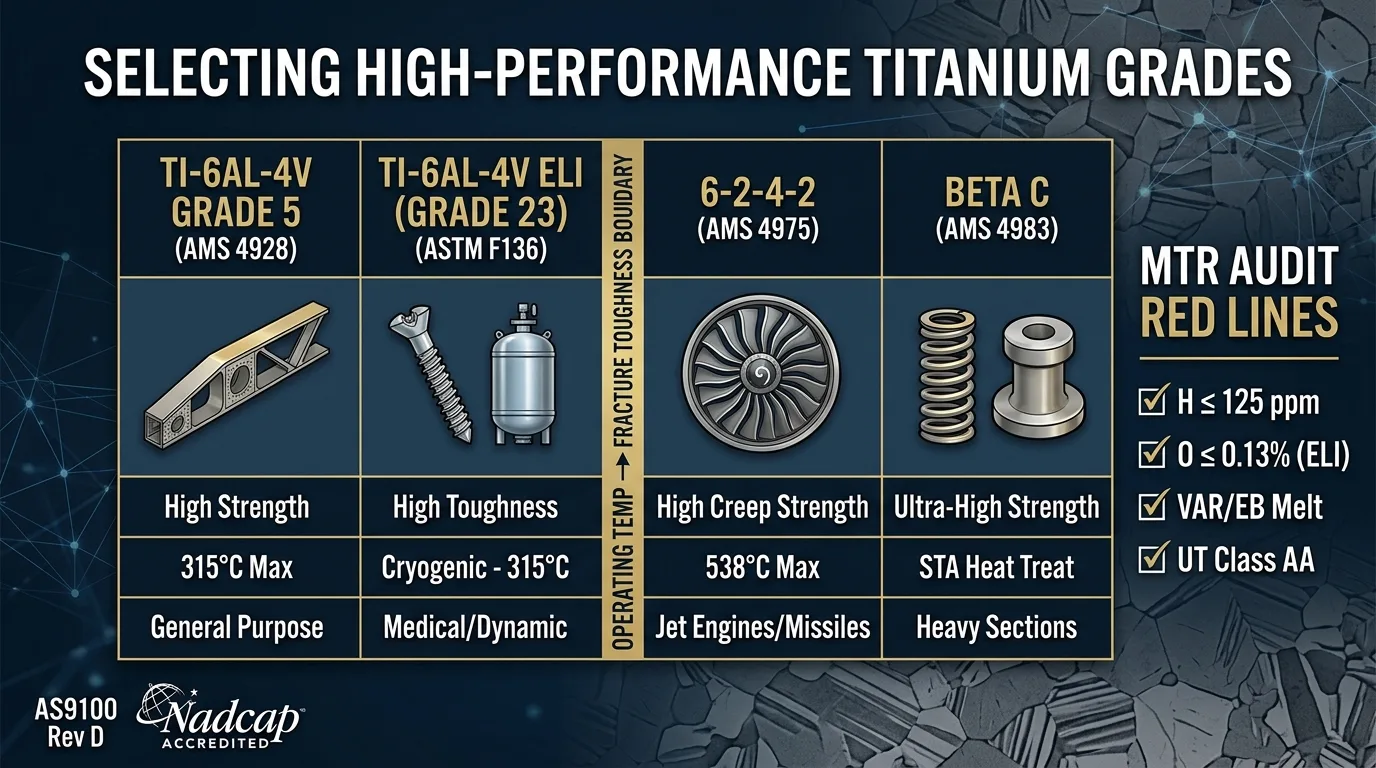
Selecting High-Performance Titanium Grades for Extreme Stress & Thermal Environments — Ti-6Al-4V (Grade 5) vs. Ti-6Al-4V ELI (Grade 23) vs. 6-2-4-2 vs. Beta Alloys
A technical DFM, metallurgical evaluation, and quality assurance guide for aerospace, defense, and high-reliability procurement — comparing Ti-6Al-4V Grade 5, Grade 23 ELI, 6-2-4-2, and Beta alloys for extreme stress and thermal environments.
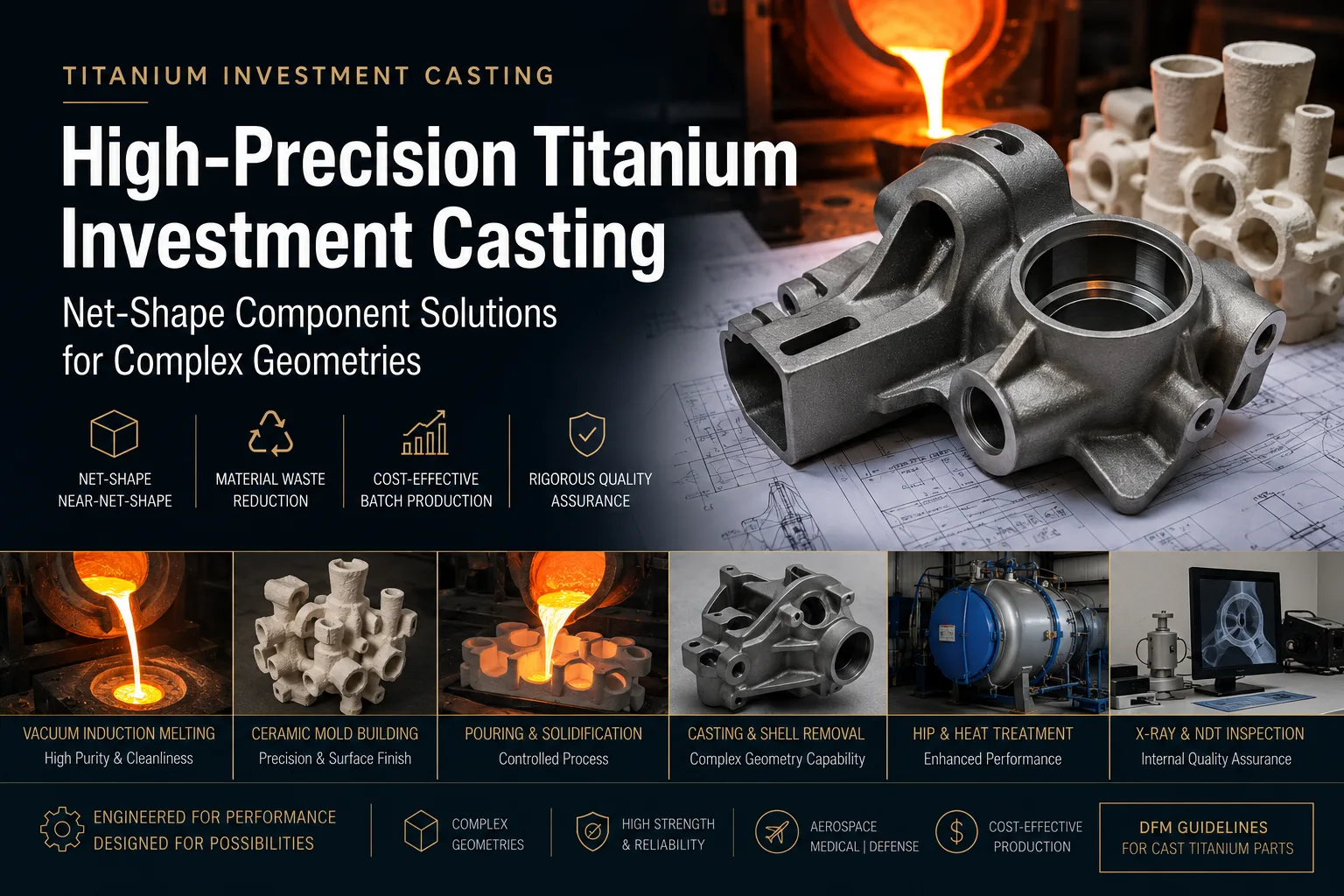
High-Precision Titanium Investment Casting — Net-Shape Component Solutions for Complex Geometries
An engineering analysis of titanium investment casting for complex-geometry components — process mechanisms including vacuum induction melting and ceramic mold interaction, near-net-shape capability for material waste reduction, cost comparison with forging and CNC milling for batch production, post-casting quality controls including HIP and X-ray NDT, and DFM guidelines for cast titanium parts.
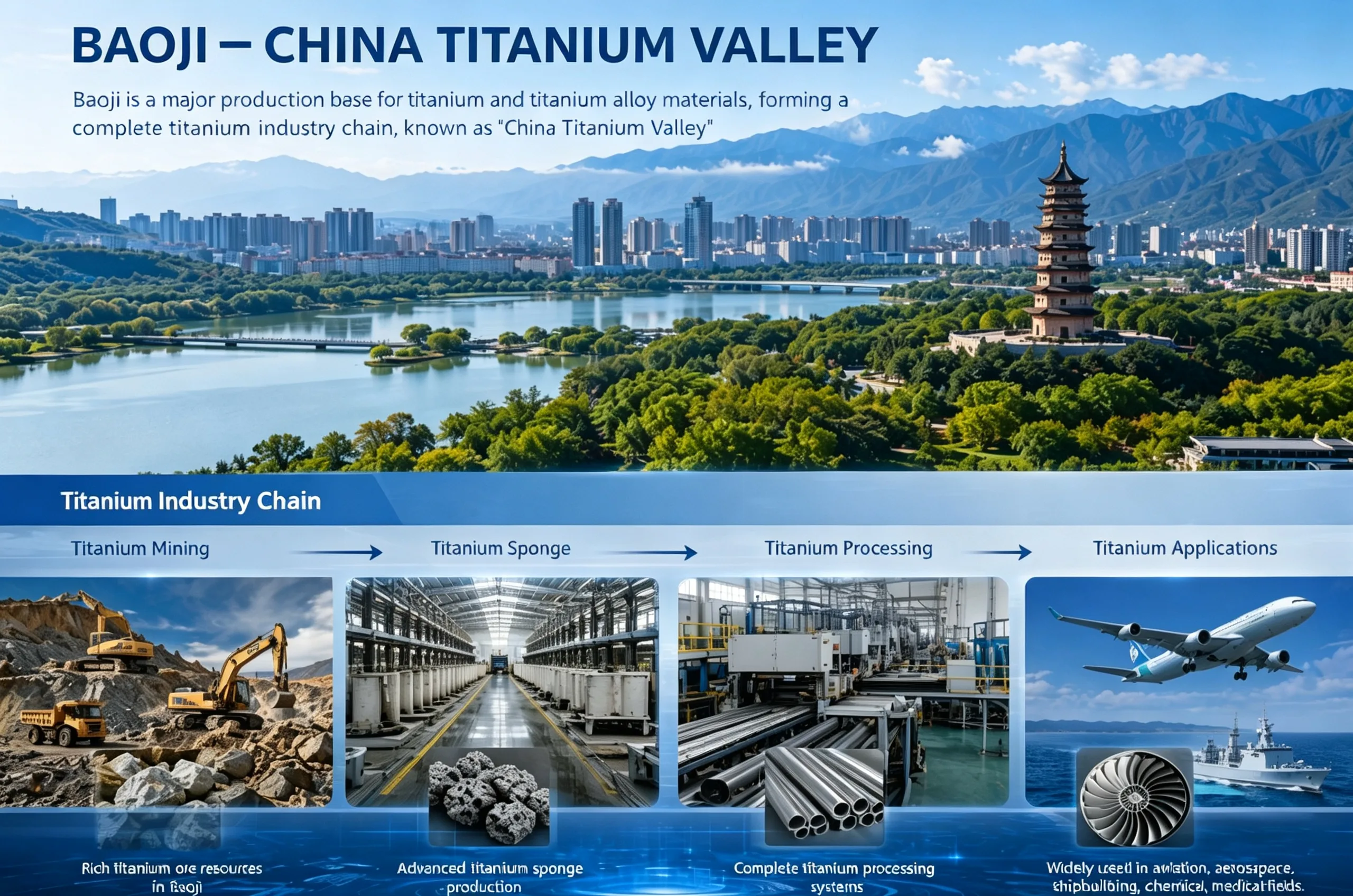
Why Is Baoji Known Globally as "China Titanium Valley"?
Why Baoji is called China Titanium Valley — the industrial history behind the label, what the production scale really means for buyers, and the qualification checks every procurement team should run before sourcing titanium from the cluster.
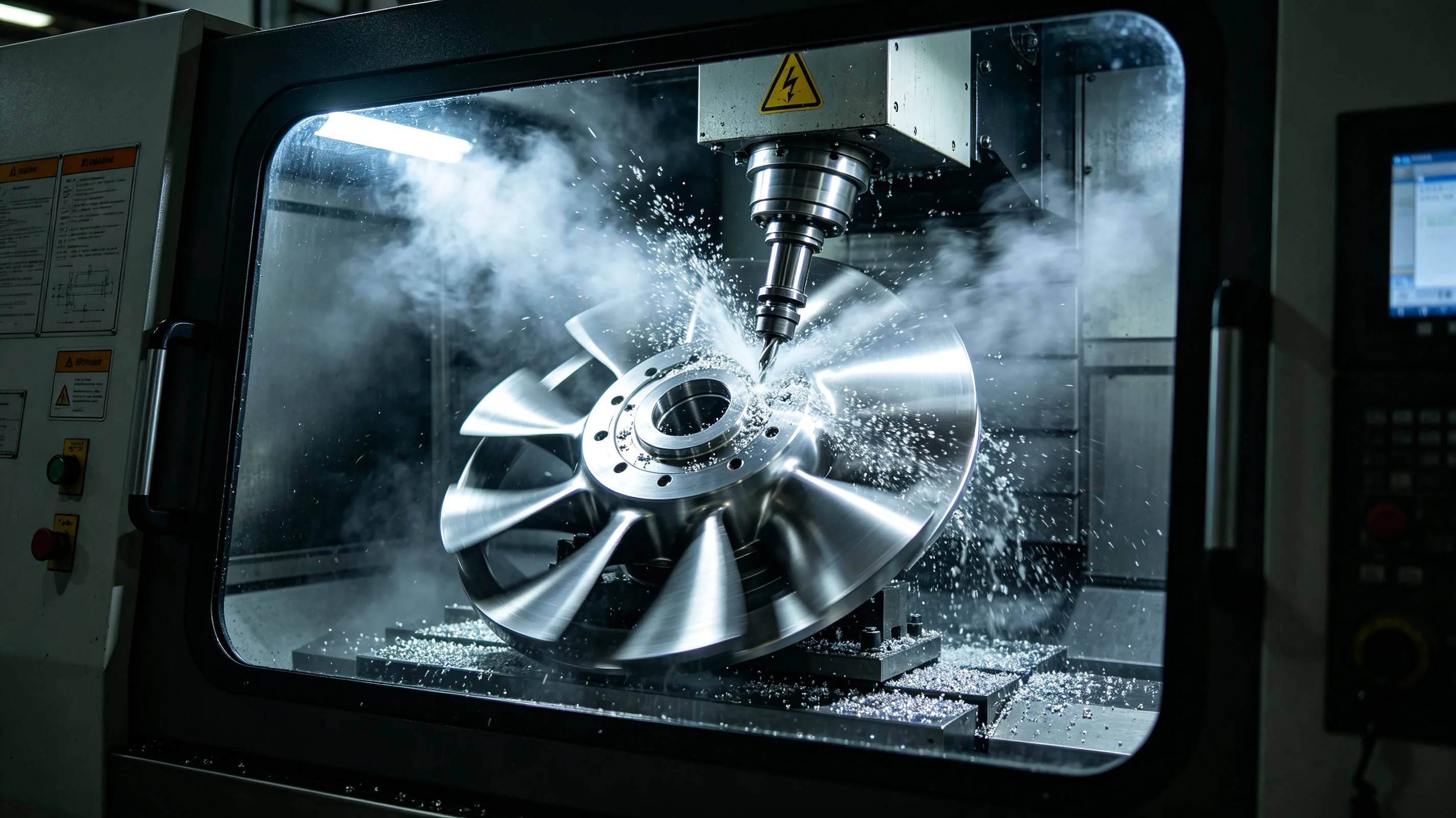
5-Axis Titanium Machining Best Practices for Complex Aerospace Components
An engineering analysis of 5-axis machining strategies for titanium components — tool orientation principles for rigid cutting conditions, chip load management in complex toolpaths, thermal distribution across multi-axis moves, and programming approaches that leverage the machine's full capability while managing titanium's unique machining characteristics.
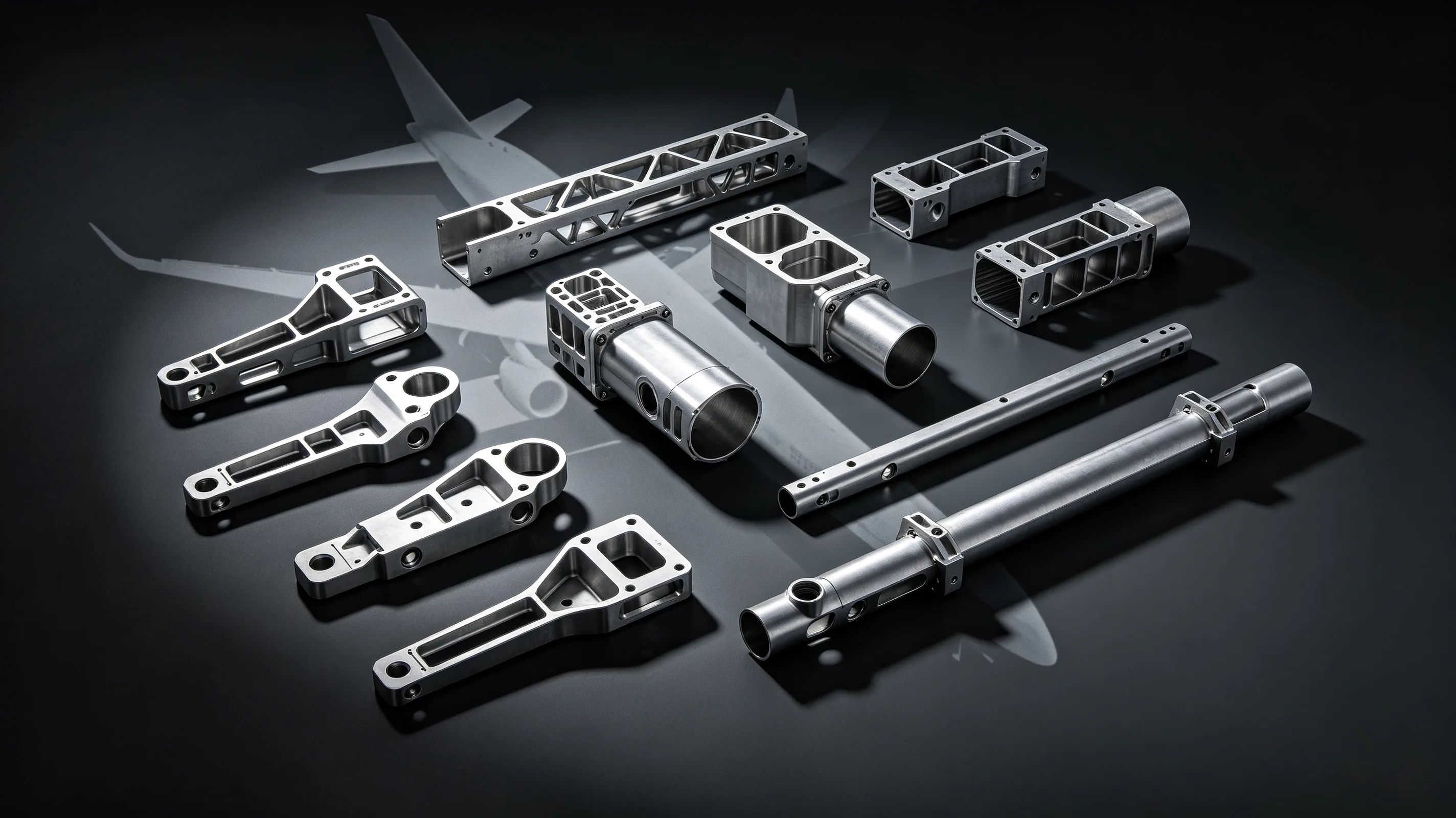
Aerospace Titanium Components — Manufacturing Challenges and Engineering Solutions
An engineering analysis of manufacturing challenges specific to aerospace titanium components — thin-wall structural parts, tight tolerance requirements, material traceability and certification compliance, and process control strategies for AS9100D production environments.

Alpha Case Formation in Titanium: Prevention and Removal
An engineering analysis of alpha case formation during titanium heat treatment and machining - the oxygen-enriched surface layer that embrittles titanium above 400 degC, how it affects part performance, and the process controls needed to prevent or remove it.
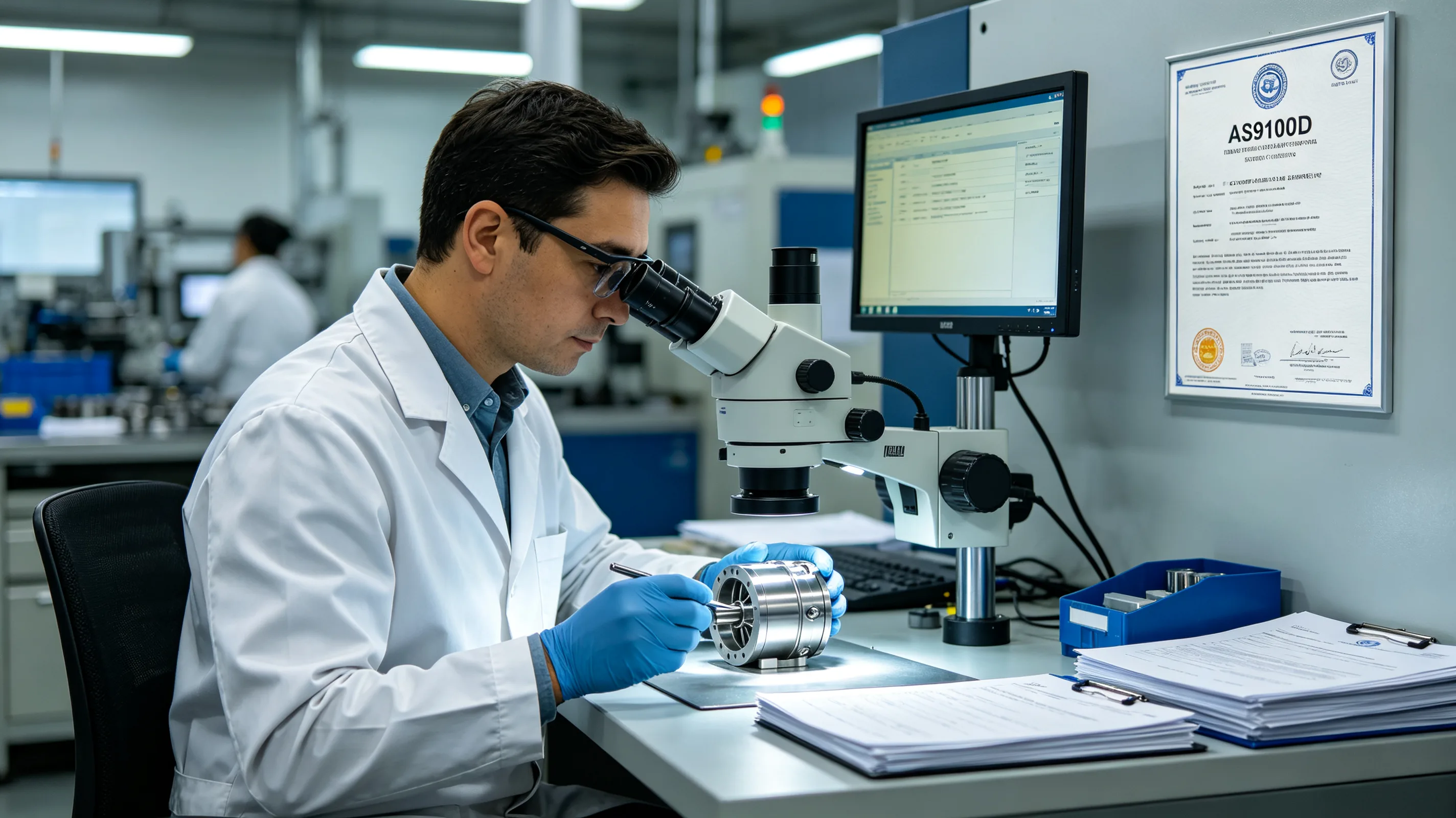
AS9100D for Titanium CNC Manufacturing — What It Means for Aerospace Quality
An engineering assessment of AS9100D certification for titanium CNC machining suppliers — the quality management system requirements that affect aerospace component procurement, what AS9100D certification demonstrates about process control capability, and practical considerations for buyers evaluating certified suppliers.
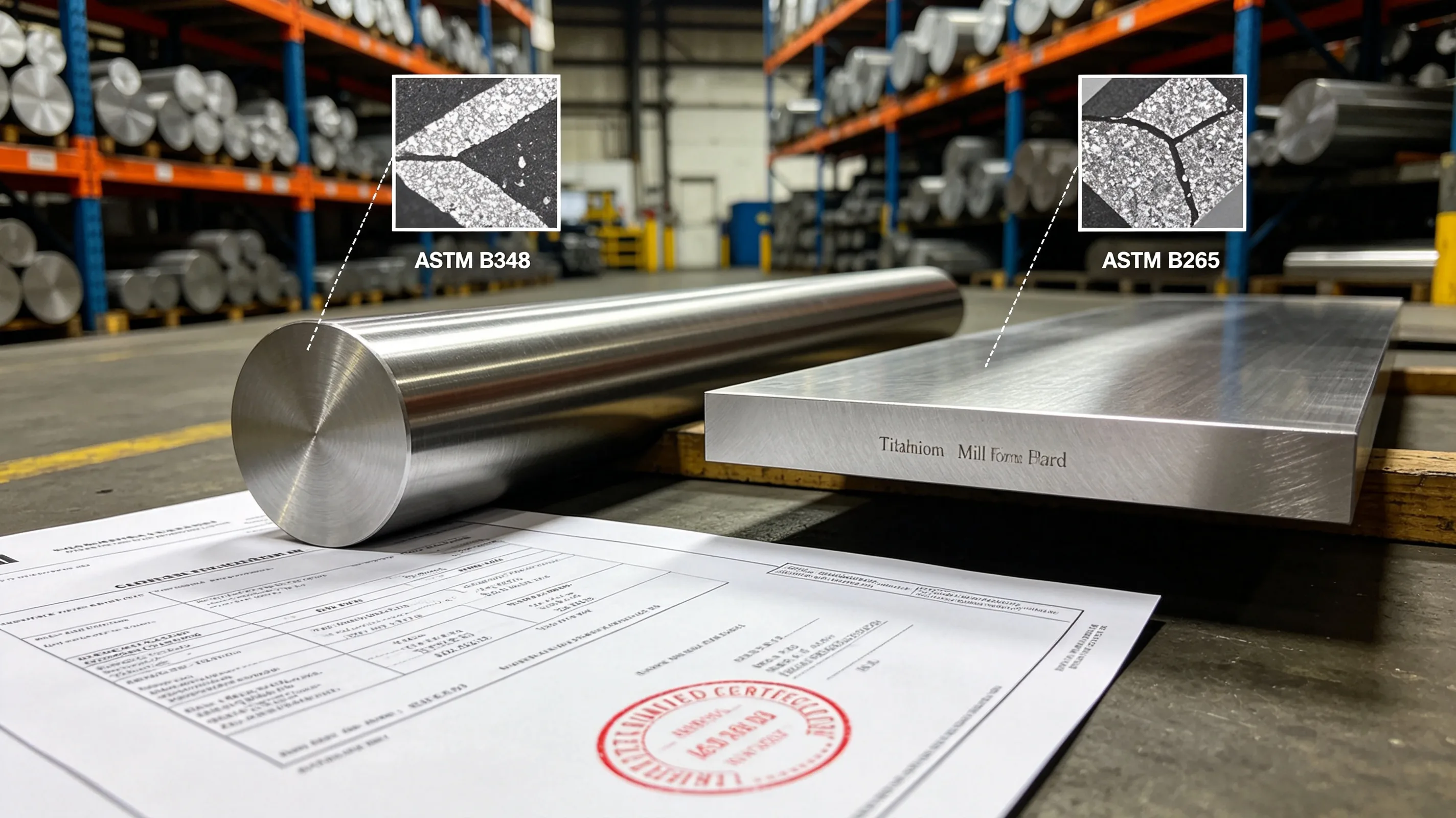
ASTM B348 vs ASTM B265 — Understanding Titanium Bar and Plate Material Standards
A technical comparison of ASTM B348 (titanium bar and billet) and ASTM B265 (titanium sheet, plate, and strip) material standards — product form coverage, mechanical property requirements by grade, testing and certification requirements, and practical implications for material selection.
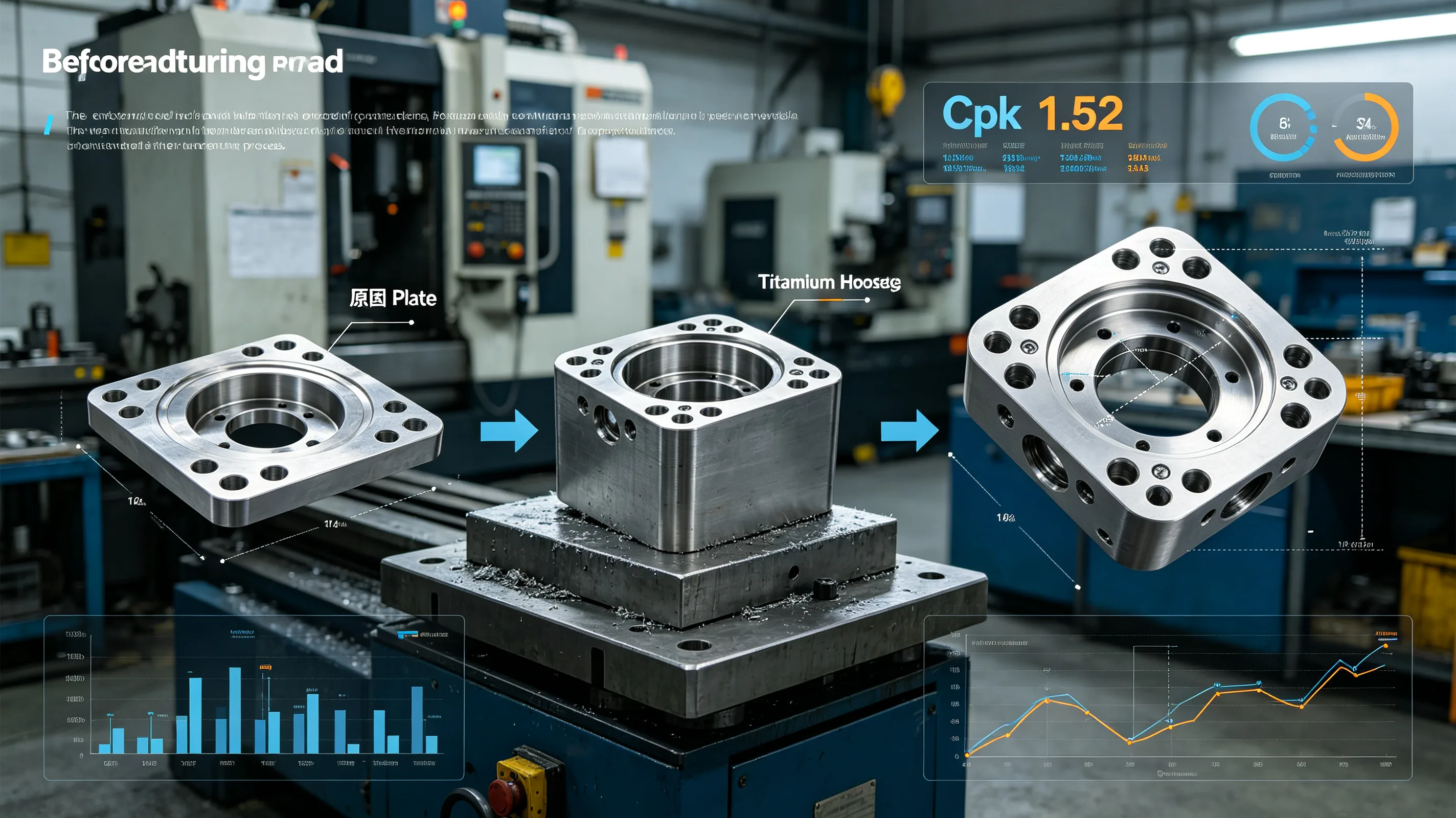
Case Study — Complex Titanium Component Process Development for Tight Tolerance Production
A case study of developing a manufacturing process for a complex titanium component with multiple tight-tolerance features — machining sequence optimization, tool selection and validation, in-process inspection strategy, and production scale-up from prototype to volume manufacturing.
One Metal. One Focus. Infinite Precision.
Founded in 2011 in Baoji's Titanium Valley, BOZE Metal is dedicated exclusively to titanium — from raw material to precision engineering. AS9100D, ISO 13485 & ISO 9001 certified with 500+ clients across Aerospace, Medical & Motorsport industries, we deliver end-to-end precision titanium CNC machining with full material traceability from source to component.
Boze Titanium Manufacturing Center is operated by Baoji Boze Metal Products Co., Ltd.